My current TV remotes keep failing or getting lost, and juggling multiple remotes for my TV, soundbar, and streaming box is driving me crazy. I’m looking for an easy-to-use, reliable universal TV remote that works with several brands and devices. What models or features should I focus on so I buy the right one the first time?
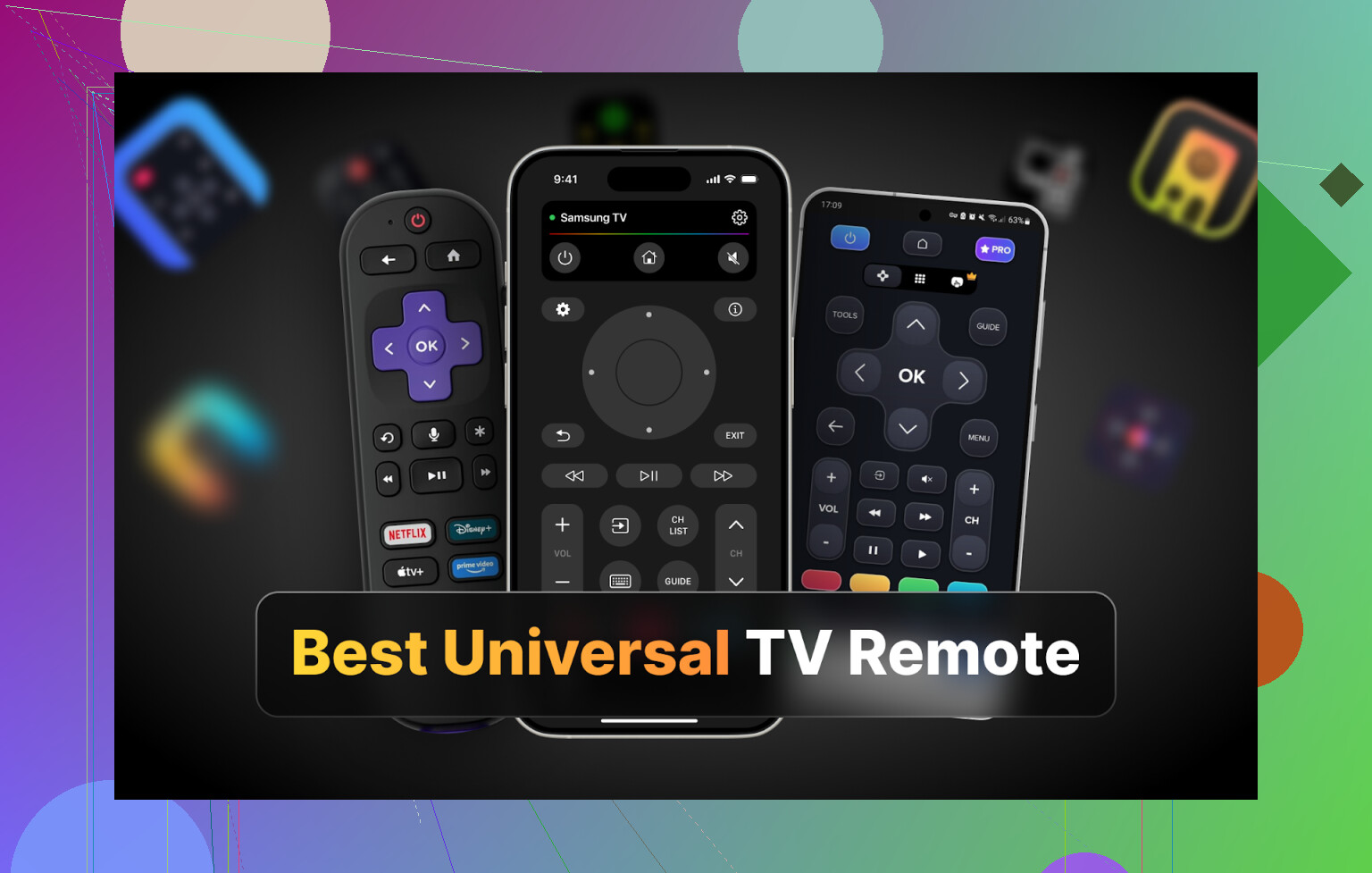
Hi all,
I hit the point where I was done hunting for TV remotes under couch cushions. We have two TVs at home, Samsung in the living room and LG in the bedroom, and each came with its own remote that likes to disappear right when a show starts.
So I went down the rabbit hole of phone-based TV remotes. I tried a bunch on iPhone, Android, and Mac, used them for a few days each, and wrote down what annoyed me, what worked, what crashed, and what felt like a money trap.
If you are trying to replace or back up a physical remote, this might save you some trial and error.
Part 1: TV remote apps I tried on iPhone
On iOS I pulled the four that kept showing up in App Store search and ads:
- TVRem Universal TV Remote
- TV Remote – Universal Control
- Universal Remote TV Smart
- TV Remote – Universal
TVRem Universal TV Remote on iPhone
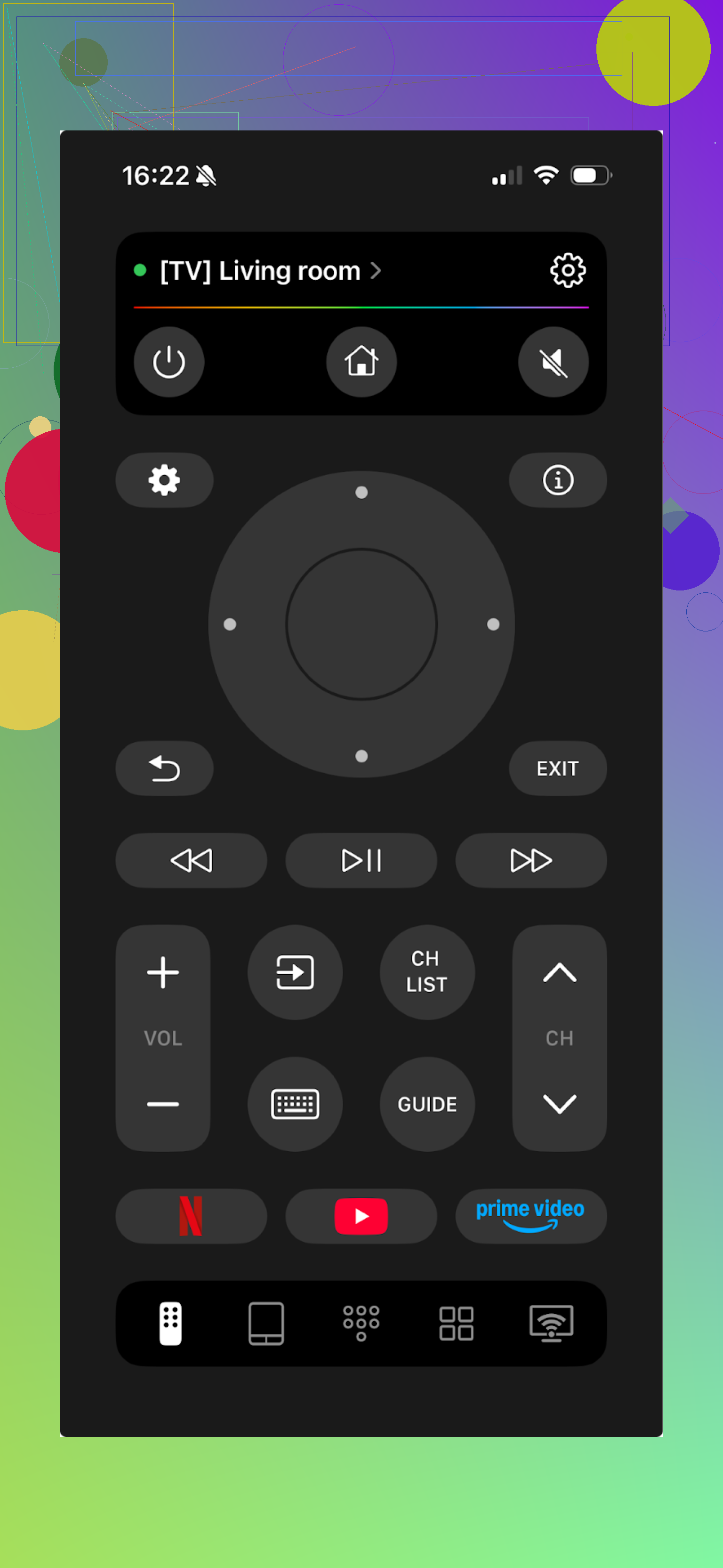
This is the one I started with and ended up keeping on my phone.
It connects over Wi‑Fi to a bunch of brands: LG, Samsung, Sony, Android TV, Roku, etc. I used it daily with Samsung and tried it once with a friend’s Sony.
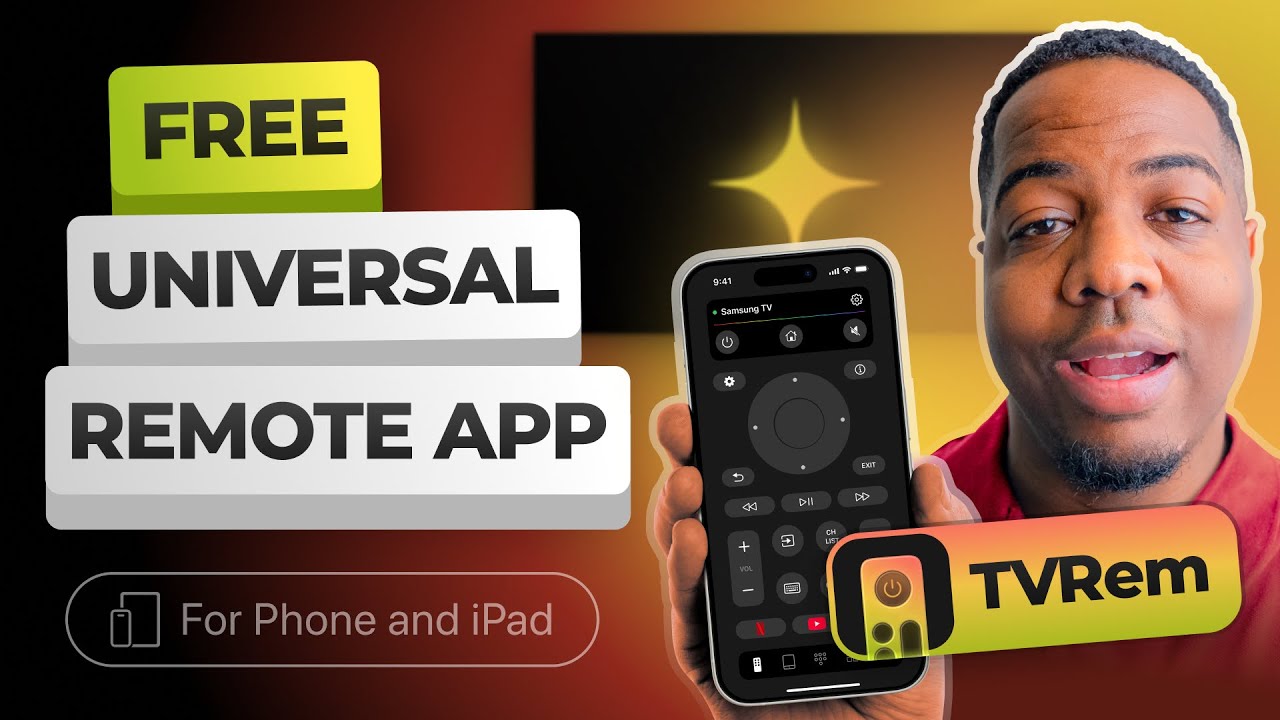
What stood out for me:
- No paywall at all. No “free but everything important is locked” nonsense. I kept waiting for a “start your trial” popup and it never came.
- Touchpad is smooth. Gestures feel close to using a laptop trackpad.
- Voice works, if your TV supports stuff like Google Assistant or Alexa.
- Built-in keyboard is simple but useful when you type passwords.
Pros I saw:
- Interface is clean, nothing confusing
- TV detection and connection took me under 10 seconds
- No subscription, no one-time fee
- Worked on every brand I tried except one
- All normal remote functions are there
Con:
- No Vizio support
Price: free
Link:
There is also a Reddit thread where people compare remote apps vs physical remotes and talk through similar stuff I ran into:
Product page I saw while going down that rabbit hole:
My take: if you have a non‑Vizio TV and you want something simple that does not nag you about money, this one is easy to live with.
TV Remote – Universal Control on iPhone
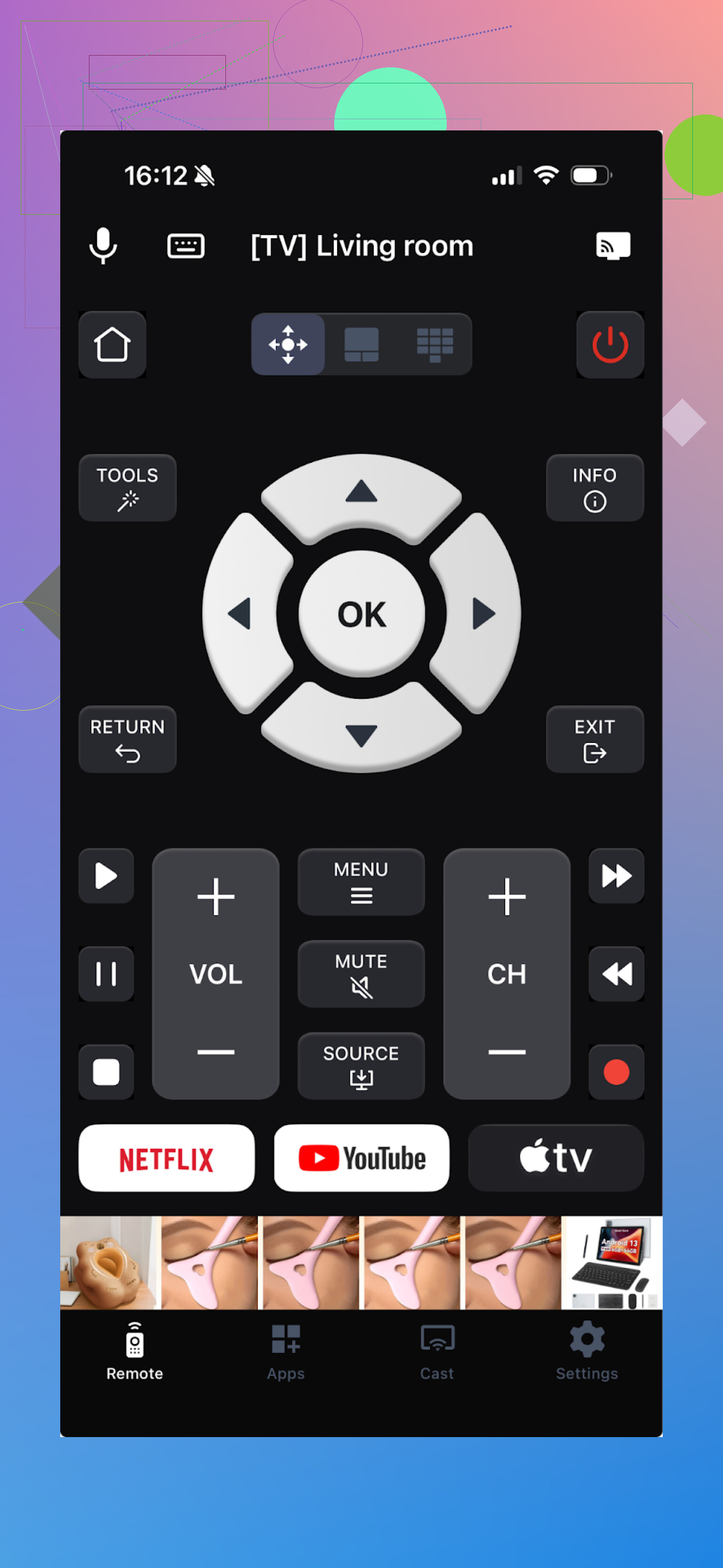
This one looks fine on screenshots, and it does work with a lot of brands. Connects via Wi‑Fi too, so both TV and phone need to sit on the same network.
Features I used:
- Touchpad
- Voice control
- Keyboard
- Channel launcher
All present. The issue is the paywall. To check everything, I had to start the free trial. Without that, you run into locked icons constantly.
There is also media casting, but I only needed a remote, not a casting tool.
Pros:
- Has all the controls I expect
- Wide brand support
Cons:
- Ads inside the app
- Most basic things are behind a subscription
- It crashed a few times when I opened the menu quickly
Price: from $4.99 and up
Link:
My take: it works, but it feels like walking through a store where every shelf is blocked by pay screens. I did not buy it. If you do not mind paying for a remote and you like its design, it might still be fine for you.
Universal Remote TV Smart on iPhone
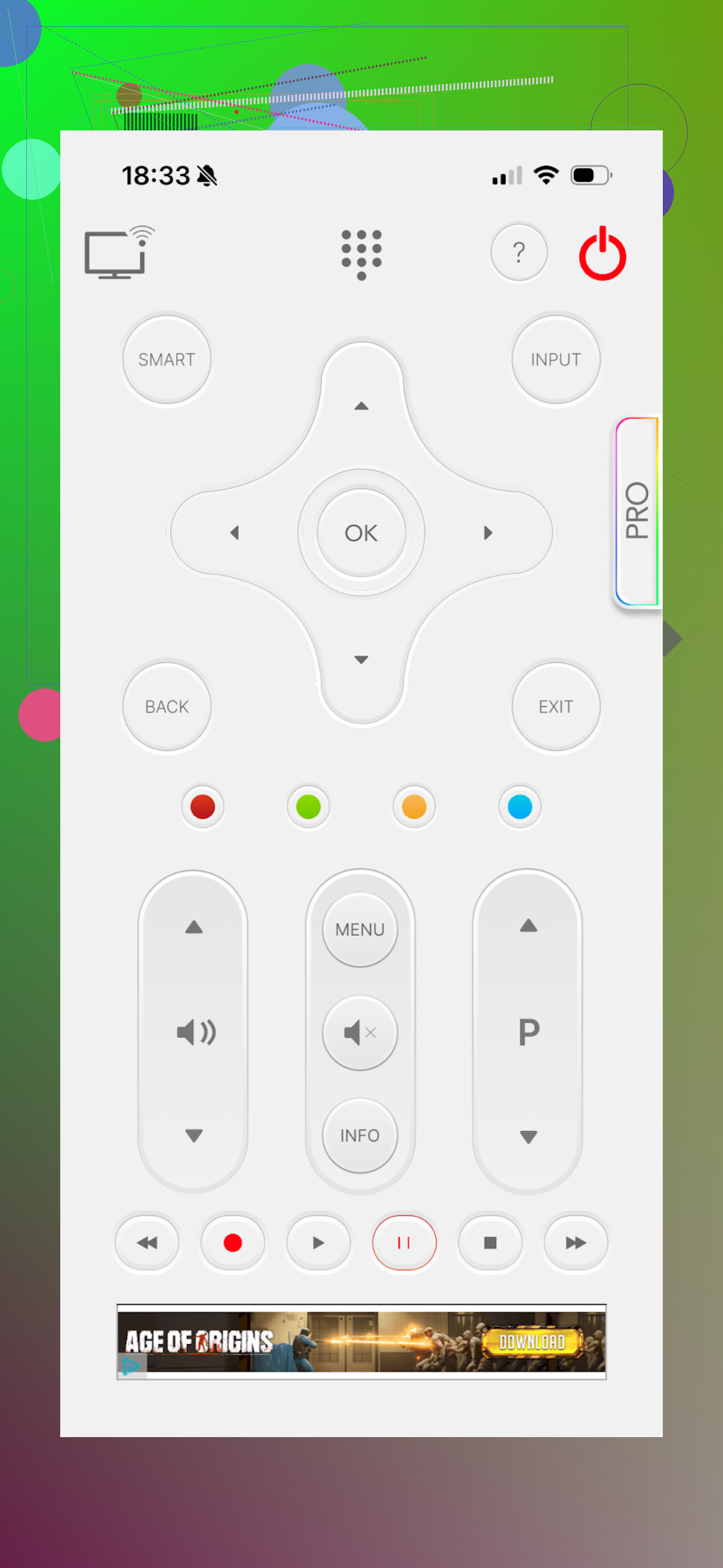
This one tested my patience.
It also supports many brands, same idea, Wi‑Fi, universal, etc. The problem is how it feels in hand. Button placement is awkward. It does not feel like a physical remote at all, more like a random control panel.
It still has the basics:
- Keyboard
- Navigation for apps
- Volume
- Channel switching
But I needed too many taps to get simple stuff done.
Pros:
- Works with many TV brands
Cons:
- UI felt clumsy to use
- No voice control option
- Ads that force you to sit through videos
- I hit an arrow to open YouTube, then hit OK, and it threw a paywall at me
Price: from $7.99 and up
Link:
My take: this was the weakest one on iPhone for me. Paid features piled on top of a rough interface is not worth the money.
TV Remote – Universal on iPhone
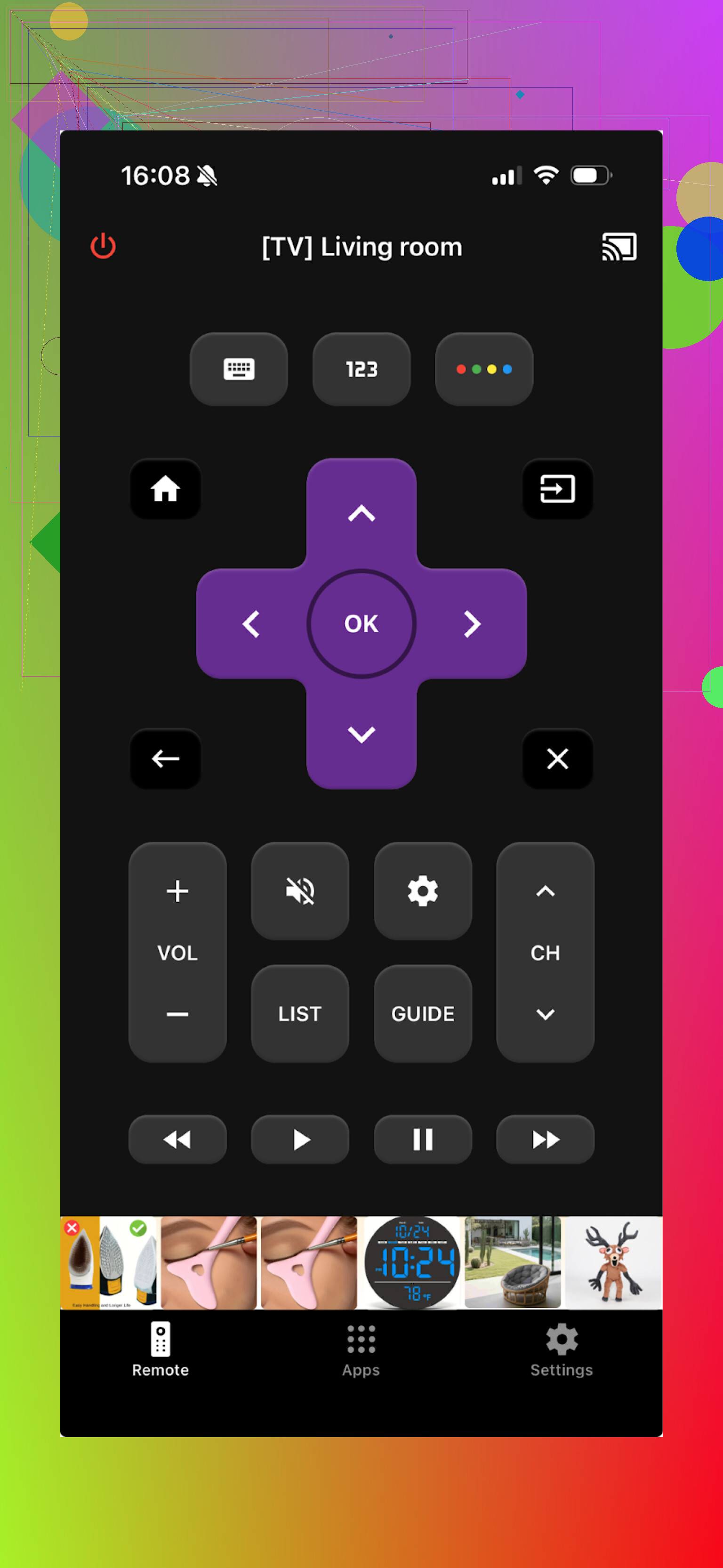
Another “turn your iPhone into a remote” app. It supports LG, Samsung, Sony, Vizio, Android TV, etc.
It also uses Wi‑Fi, so same network rule applies for TV and iPhone.
Features are more bare-bones:
- Channel and app switching
- Basic playback controls
- Keyboard input
Pros:
- Finding and connecting to TV was fast
- Interface is simple
- Standard functions worked without drama
- Free trial
Cons:
- Ads unless you pay
- Most advanced features are locked. A lot of icons trigger upsell screens
Price: from $4.99 and up
Link:
My take: I used the trial. It worked, but the main screen lagged sometimes. The pattern was the same as with others: basic remote fine, everything else paywalled. Tolerable, but not my first choice.
Part 2: TV remote apps I tried on Android
On Android, I grabbed a few different “universal” apps and rotated between them on my wife’s phone.
Universal TV Remote Control (Codematics)
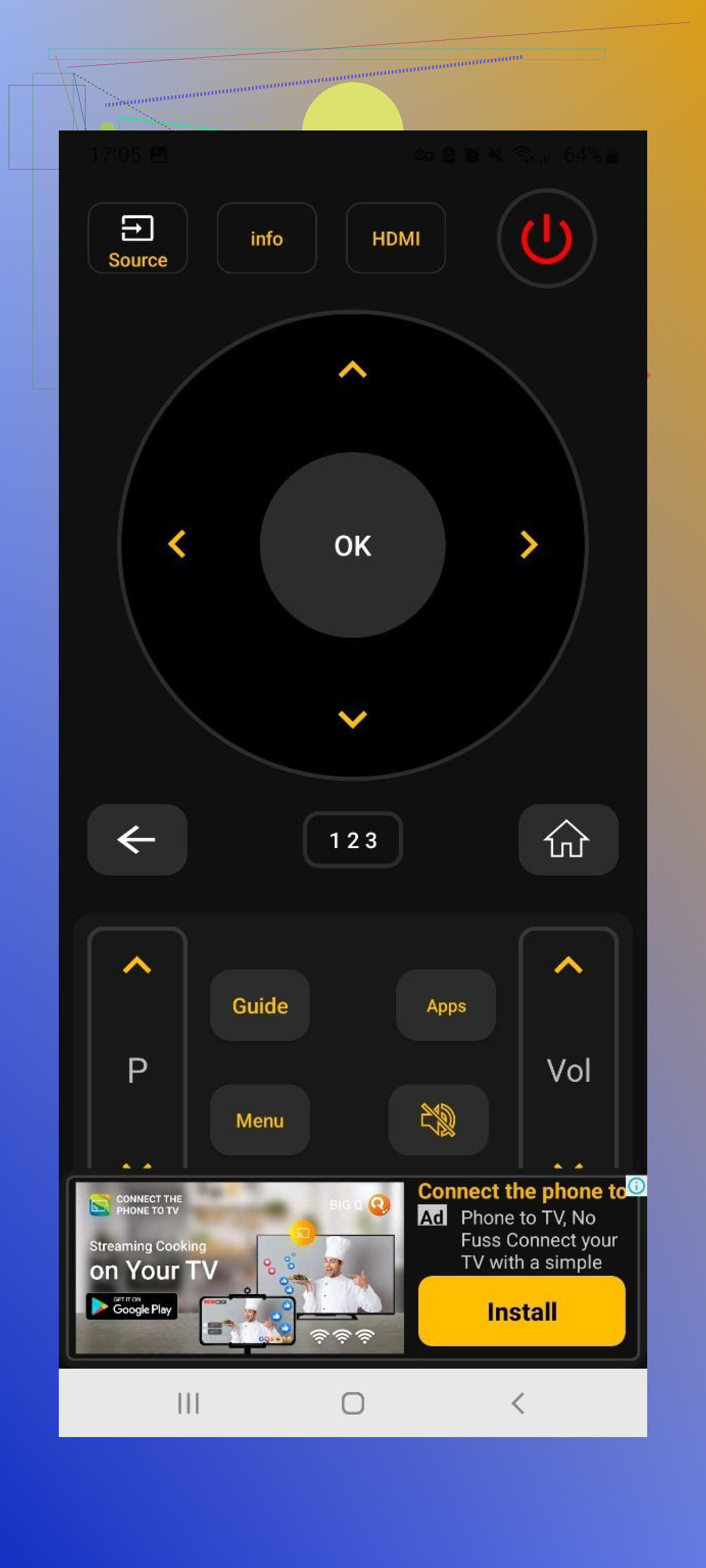
This one shows up a lot on Google Play.
It works with a long list: Sony, Samsung, LG, Philips, TCL, Hisense, Panasonic, and more.
Features that matter:
- Trackpad
- Voice search
- App control
- On-screen keyboard
The nice part: all the key features were free.
The problem: ads. Everywhere. Some were hard to close or did not show a close button immediately. That broke the flow of using it as an actual remote.
Pros:
- Huge device support
- Works with Wi‑Fi and IR, so older phones with IR blasters are covered
- All remote basics were free
Cons:
- Way too many ads, sometimes blocking the whole workflow
- It crashed a few times, and I had to reconnect the TV
Price: free
Link:
My take: I liked the feature set at first. After a day the ads annoyed me enough that I uninstalled it.
Remote Control For All TV | AI
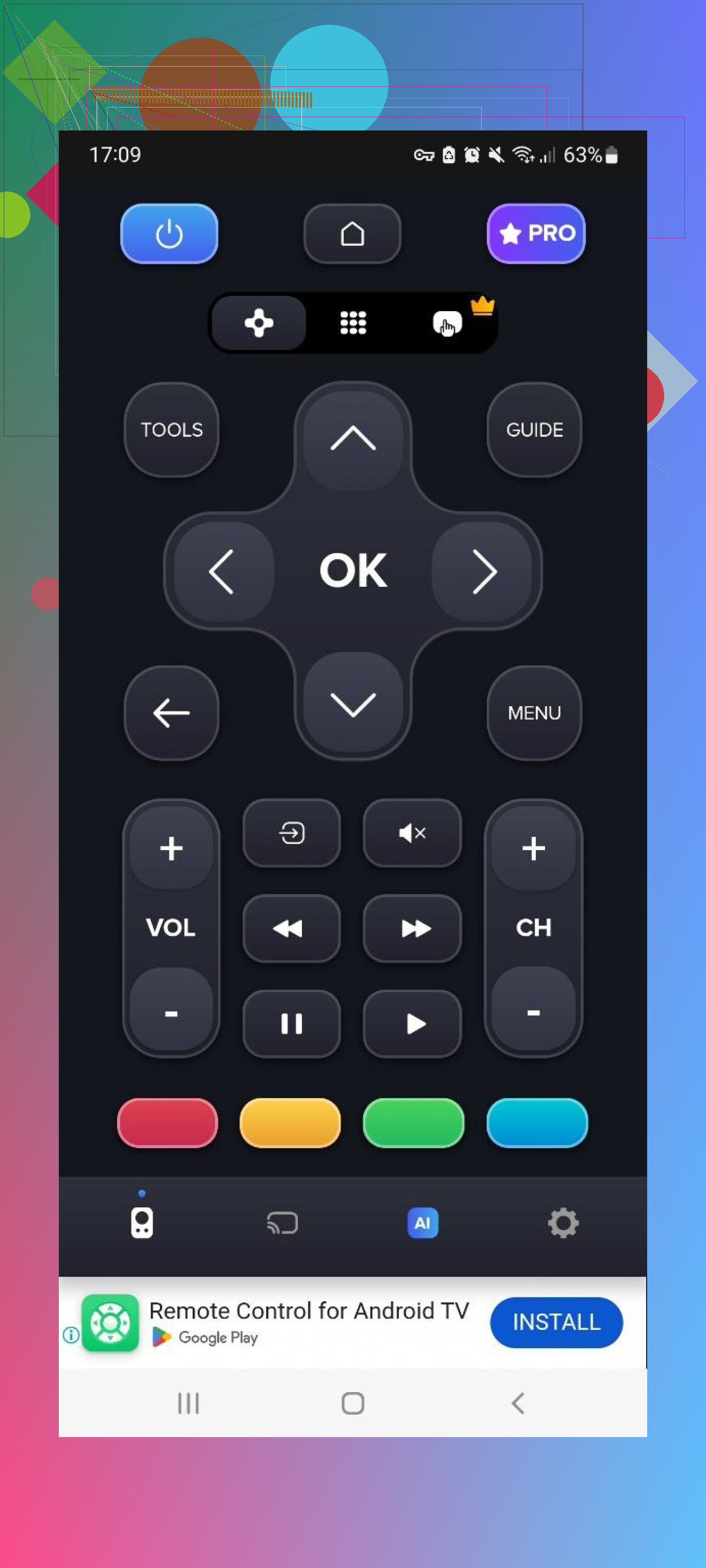
This app also pitches itself as universal and uses Wi‑Fi.
In the free version you get:
- Standard remote buttons
- TV control once it finally finds the device
Downsides I saw:
- It took a long time to detect the TV
- Ads again, and not light ones
The paid version unlocks:
- Ad removal
- Some “AI assistant”
- Keyboard with voice input
- Screen mirroring
Pros:
- Works with many brands
- Plain remote features are there for free
Cons:
- Too many ads in unpaid mode
- Slow detection of TVs
- Most helpful features locked behind subscription or purchase
Price: from $4.99 and up
Link:
My take: it is usable if you only want volume and channel and you are fine with waiting for connection. For daily use I found the delay annoying.
Universal TV Remote Control (Unimote)
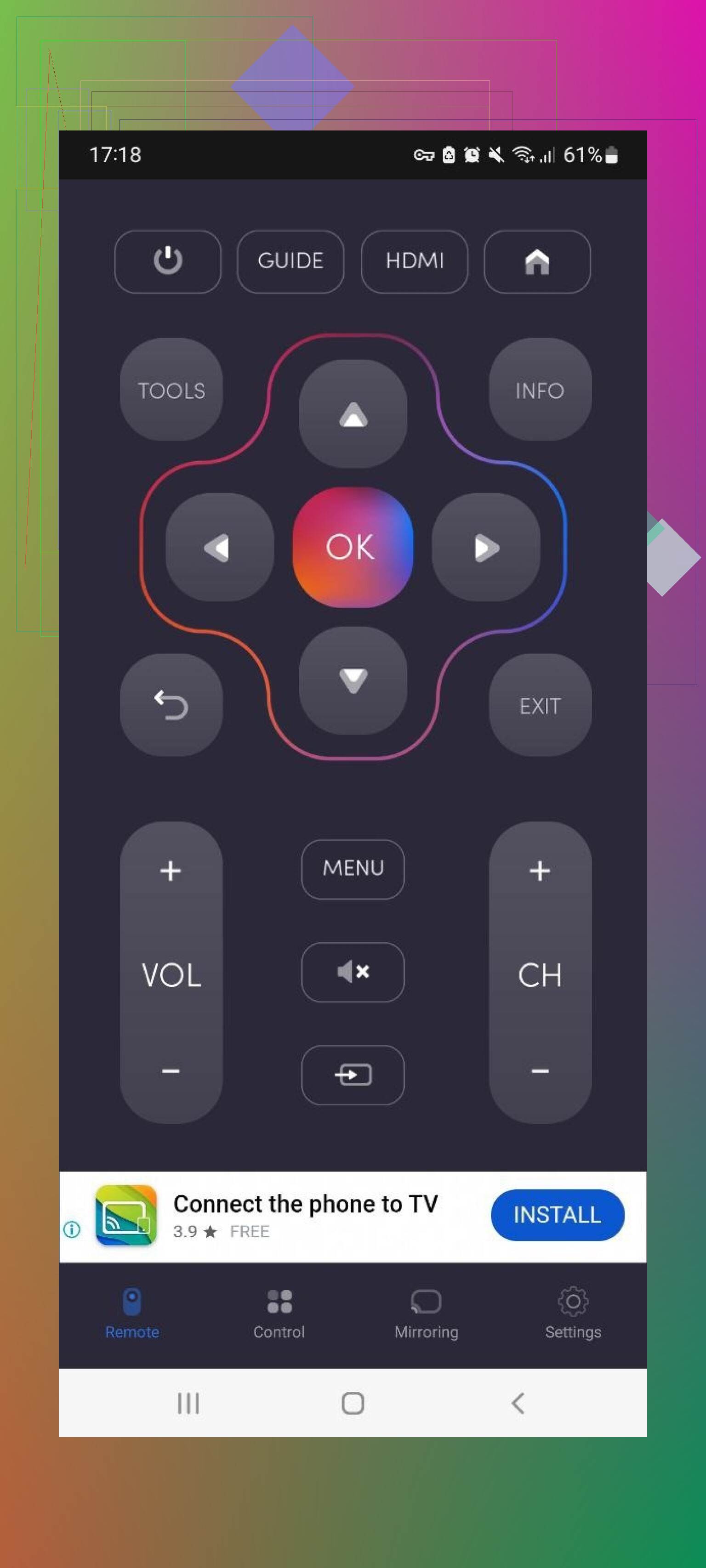
Unimote tries to cover both worlds: Wi‑Fi for smart TVs and IR for older ones, if your phone has an IR blaster.
It found my TV almost instantly, but getting a stable connection took several tries. While trying to adjust volume, I kept getting hit by full-screen ads.
Pros:
- Simple interface for basic nav
- Supports both IR phones and Wi‑Fi TVs
Cons:
- Full-screen video ads pop up often
- Lots of stuff is behind in-app purchases
- The connection dropped more than once during use
Price: from $5.99 and up
Link:
My take: decent as a backup app when your physical remote dies and you need something quick. I would not use it as my main daily remote because of the interruptions.
Universal TV Remote Control (Uzeegar)
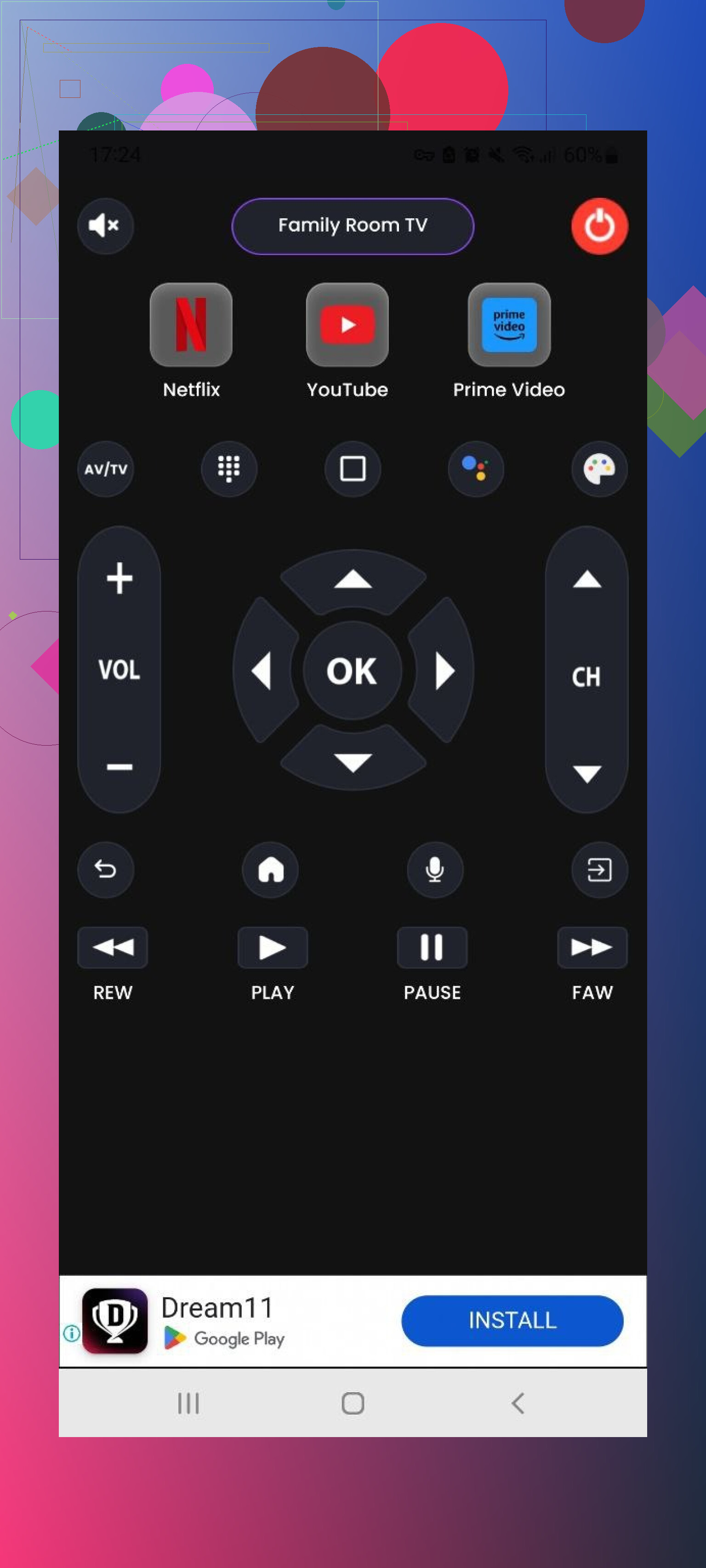
Last one I tried on Android.
Also a universal remote, supports LG, Samsung, Sony, TCL, and more. Works with both Wi‑Fi and IR.
Core features:
- Main remote screen with navigation
- Power button
- Home/Menu
- Playback controls (play, stop, back, forward)
Pros:
- Includes all the essentials for navigation
- Free trial so you can poke around first
Cons:
- Many ads
- Most features are on the paid side
Price: from $3.99 and up
Link:
My take: technically full-featured, but with paywalls on those features. If ads get on your nerves, this will not be fun to use.
For what it is worth, my wife still stuck with “Universal TV Remote Control” from Codematics despite my complaining about the ads. She only uses volume and power and apparently is less sensitive to ad spam than I am.
Part 3: Mac apps to control your TV
I also wanted to control the TV while sitting at my Mac, so I checked a couple of macOS apps too.
TVRem Universal TV Remote on Mac
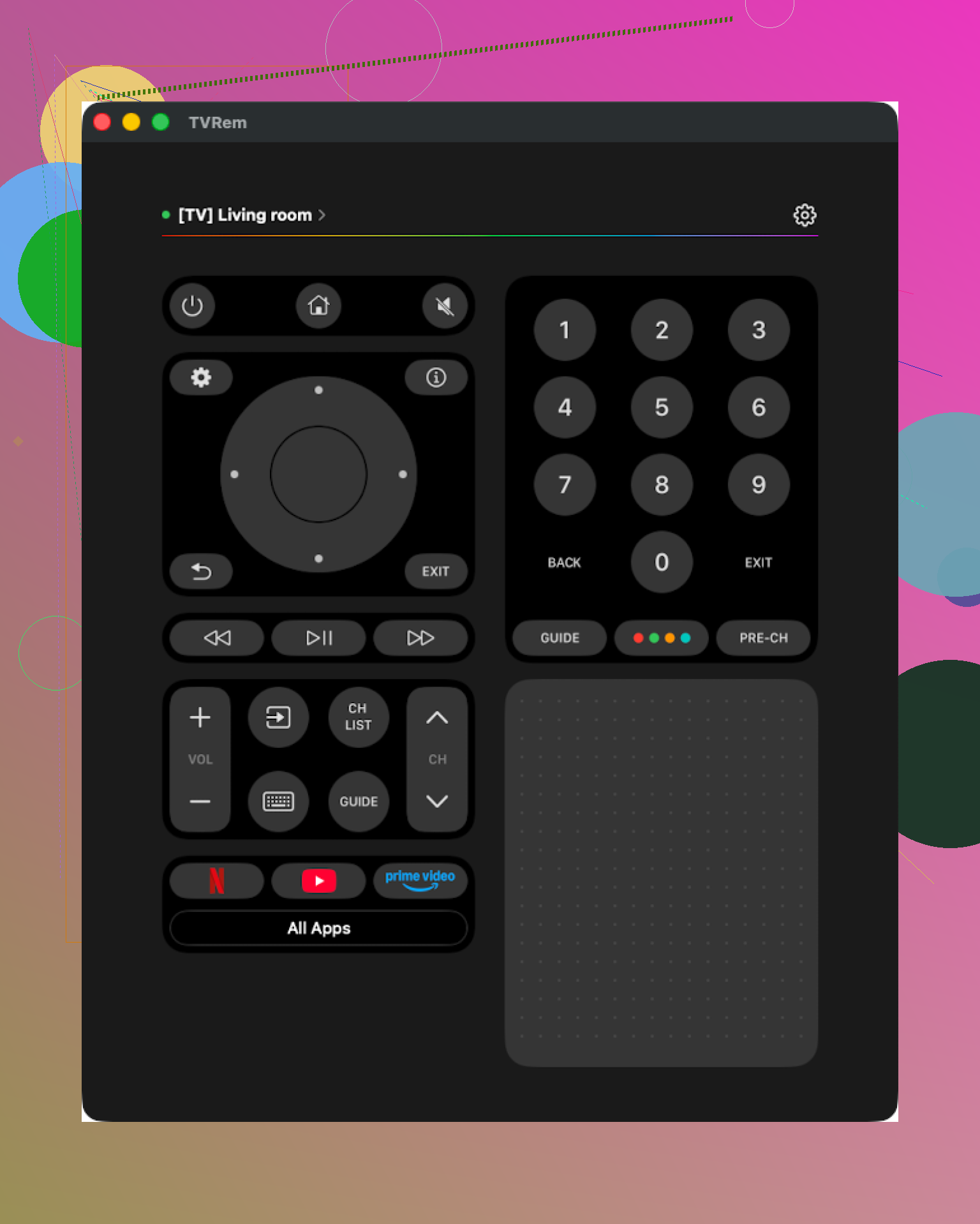
Same name as the iPhone one.
I installed it from the Mac App Store, paired it with a Samsung TV. Setup was quick. No weird pairing codes. The interface is straightforward enough that I did not need any guide.
Features I used:
- Touchpad
- Keyboard
- App launcher
No ads, no “premium” popup, and no unexpected limits.
Pros:
- Interface is simple to understand
- No ads or paywalls
- Works with many brands
- Has everything I need for daily control
Con:
- No Vizio support
Price: free
Link:
My take: if your main machines are Mac and iPhone, this combo made my TV life easier. The lack of Vizio is the one real drawback.
TV Remote, Universal Remote on Mac
Another Mac App Store remote.
It detects and connects to TVs without drama and supports many brands.
It looks OK visually, but when I tried using the features I needed most, I kept running into paywalls. The app also crashed a few times. Not every hour, but enough that I noticed it and stopped trusting it.
Pros:
- Interface is acceptable
- Supports many TVs and does include basic controls
Cons:
- Many features require payment
- Occasional crashes
Price: from $4.99 and up
Link:
My take: if you are fine with paying and you do not mind reaching out to support when something breaks, it might be okay. I did not feel like babysitting it.
Part 4: Physical remote vs remote app
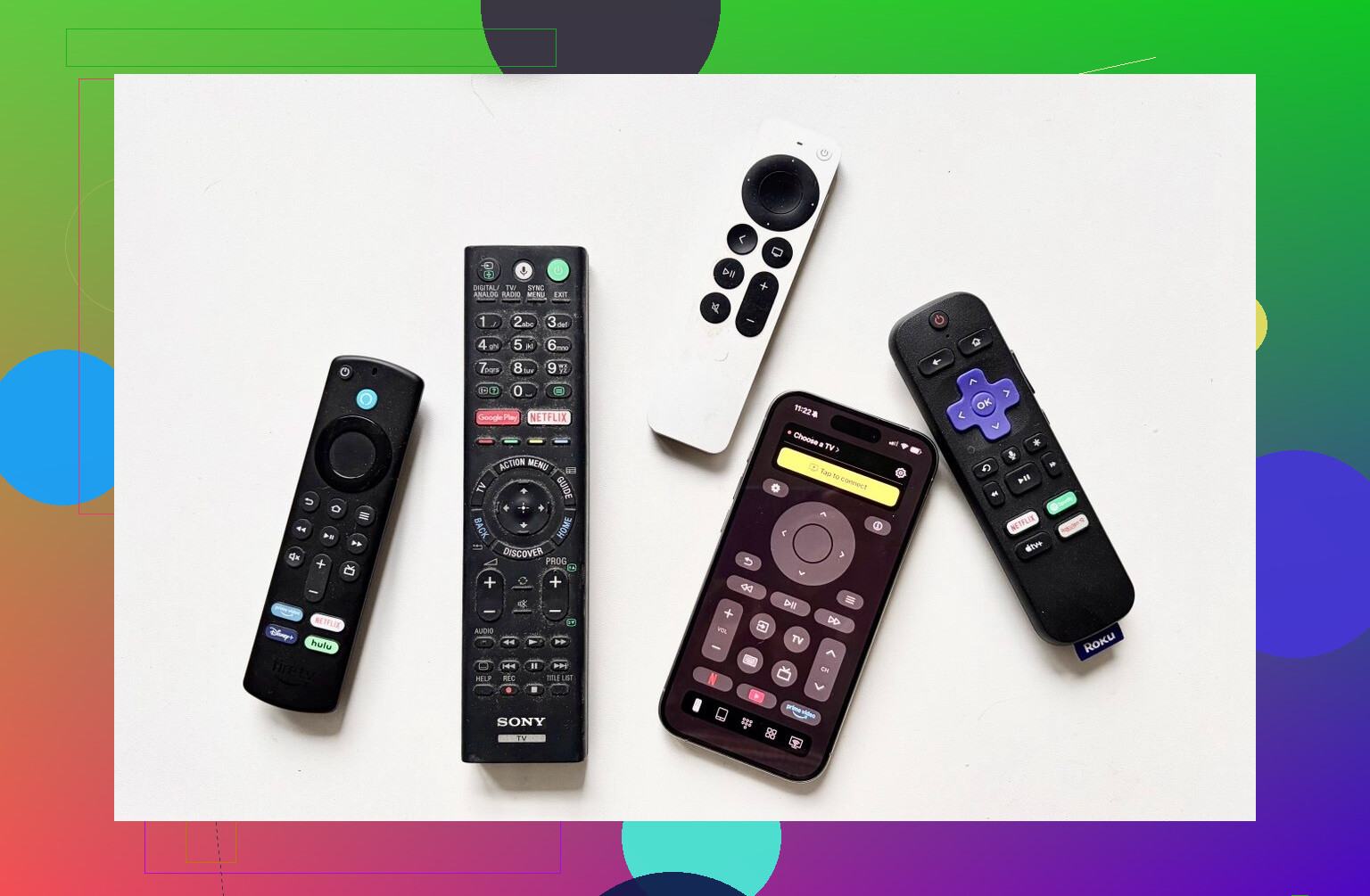
How I see the two after using both side by side.
Physical remote
The usual plastic stick you get with the TV or buy as a replacement.
Remote app
Software on your phone or tablet that turns the device into a remote over Wi‑Fi, Bluetooth, or IR.
Why I ended up liking apps more
- Harder to “lose”
My phone is almost always near me. The remote is the thing that somehow ends up in the kitchen or under the dog. So for me, the phone wins on availability.
- Text entry does not hurt as much
On-screen keyboard or hardware keyboard on Mac is a huge upgrade over hunting letters on a D‑pad. Passwords, search fields, logins get done much faster.
- Cost
A lot of remote apps are free or cost a few dollars.
Replacement physical remotes on Amazon for 2019–2025 models:
- Samsung around 15–20 dollars
- LG around 13–35 dollars
If a free or cheap app works with your TV, the math is simple.
- One control for multiple devices
From one app you handle living room TV, bedroom TV, maybe a streaming box. I found this helpful with Samsung + LG at home. No need to remember which remote belongs where.
- Interface
Some stock remotes have strange layouts, like buried input buttons or missing app shortcuts. Good apps put frequent functions on the main screen and hide the rest.
Limitations I ran into with apps
- You need Wi‑Fi or Bluetooth working. If the TV drops off the network or your router reboots, the remote stops responding.
- Your phone has to be unlocked and awake. If you use aggressive battery saving, it might kill the app.
- Support depends on the TV model. Some older or cheaper sets only expose simple power/volume functions to apps.
What I ended up using
After trying all of these:
-
On iPhone:
TVRem Universal TV Remote stayed on my phone. It is free and covers everything I need: touchpad, keyboard, app control. Lack of Vizio support is the one gap, but we do not own a Vizio set.TV Remote – Universal was the runner-up. The trial showed it works fine. If you prefer that UI and are okay paying, it is a workable paid option.
-
On Android:
My wife settled on “Universal TV Remote Control” from Codematics. I think the ad load is excessive, but she only taps volume and power, so for her use it is “good enough.” -
On Mac:
TVRem on macOS was the only one I kept. Free, no ads, stable with our Samsung.
If you are deciding what to install, I would say:
- Start with one free option that supports your exact TV brand.
- Use it for a week.
- If the ads interrupt you every few taps, delete and move on.
- Only pay once you are sure you like the layout and that it does not crash.
Hope this helps you skip some of the trial-and-error I went through.
68 Likes
If your goal is “one thing for TV + soundbar + streamer” and less hunting under cushions, I’d skip phone apps as the primary fix and go straight to a good physical universal remote, then use apps as backup.
@mikeappsreviewer covered phone and Mac apps well. I disagree a bit on using apps as the main remote. They are fine backups. For daily volume mute and quick input switching, a dedicated remote beats unlocking a phone, finding the app, waiting for Wi‑Fi, etc.
Here is what has worked well for setups like yours.
- Decide how your gear is wired
You want everything chained so one remote controls volume and power without weirdness.
Simple setup that works for most people:
• TV HDMI ARC or eARC to soundbar
• Streaming box into TV HDMI input
• Enable HDMI‑CEC on TV and soundbar
Then set one device as the “boss” remote.
- Best all‑around universal physical remotes right now
Logitech Harmony is discontinued but still sold used and some new old stock. If you are ok with used:
• Logitech Harmony Companion
• Controls TV, soundbar, streaming boxes, game consoles
• RF hub, so you do not need to point at the devices
• Activities like “Watch TV” that turn on everything and set inputs
• Works with most brands from last 10+ years
If you want something current and simpler:
• Sofabaton U2
• Infrared, supports up to 15 devices
• Works with most TVs, AVRs, soundbars, streamers that use IR
• Has a small screen to pick the active device
• Good if all your gear sits in the same room, in line of sight
• Sofabaton X1
• Successor to Harmony style
• Hub based, app setup, activity macros
• Better for mixed setups with streaming boxes, receivers, soundbars
If you want something cheap and dead simple:
• OEM‑style universal like GE or RCA 4‑device remotes
• 10–20 dollars
• Handles TV + soundbar + streaming box if they use IR
• No fancy macros, fewer buttons, but fewer things to break
- How to make sure it works with “smart TV, soundbar, and streaming box”
Before buying, check three things on the product page or manual:
• TV brand and series in the supported devices list
• Soundbar brand, most use standard IR codes so they usually work
• Streaming box type
• Roku: look for “Roku IR” if you use a non‑stick Roku that supports IR
• Apple TV: supported through Bluetooth or IR translation on Harmony or Sofabaton X1
• Fire TV: needs Bluetooth support, again Harmony or X1 tier
For a quick compatibility check, user reviews mentioning your exact model line help more than the marketing list.
- Setup steps that avoid future headaches
Once you pick a remote:
-
Program devices in this order
TV first, then soundbar, then streaming box. -
Turn CEC on for all devices
• Samsung: Anynet+
• LG: Simplink
• Sony: Bravia Sync
This lets one power command start or stop everything when possible. -
Add a couple of macros
• “Watch TV”: TV on, soundbar on, TV input HDMI 1, soundbar input TV/ARC
• “Stream”: TV on, soundbar on, TV input HDMI 2, etc. -
Tape the stock remotes in a drawer
Keep them nearby for settings changes, but do not leave them on the couch. -
Where phone apps fit in
Here is where I agree more with @mikeappsreviewer. Phone apps are great as backup or for typing:
• When the universal remote slips into a couch crater, use TVRem or similar on your phone to find it and bridge the gap.
• For passwords and search on the TV, the phone keyboard is much faster.
I would still not rely on an app as the only “universal” control for multiple devices. TV apps rarely talk directly to soundbars or external boxes unless they are same brand and in the same ecosystem.
- Concrete picks by budget
• Low budget, “good enough”
• GE 4‑Device Universal Remote
• Program TV + soundbar + streaming device IR, turn on CEC
• Mid budget, more comfort
• Sofabaton U2
• Good if all your stuff uses IR and sits in the room
• Higher budget, one‑remote‑for‑everything
• Sofabaton X1 or a used Harmony Companion
• Best for mixed smart TVs, soundbars, streamers, maybe console
If you share your TV brand and model, soundbar brand, and streaming box type, you can narrow this to a single remote model with almost no guesswork.
Short version: get one solid physical universal remote as your main controller, keep a phone app as backup, and wire your gear so that remote can actually boss everything around.
@mikeappsreviewer covered apps really well, and @cacadordeestrelas nailed the overall strategy with Harmony / Sofabaton. I’ll push a bit in a different direction:
1. Figure out what kind of universal you actually need
There are basically 3 tiers:
-
Cheap IR universal (20 bucks or less)
• Examples: GE / RCA 3‑ or 4‑device remotes
• Works if:
• TV + soundbar + streaming box all accept IR
• You do not mind separate power/input presses
• Honestly, these are fine for “TV + soundbar + basic streamer” if you’re not picky. -
Midrange smart IR (Sofabaton U2, etc.)
• Better database, can handle more devices
• Small screen to switch between “TV / Soundbar / Streamer”
• Still line‑of‑sight IR, but more flexible than the bargain stuff. -
Hub-based (Sofabaton X1, old Harmony)
• Remote talks to a hub, hub talks to everything (IR, sometimes BT)
• Good if:
• You have a Fire TV or Apple TV that really wants Bluetooth
• Gear is in a cabinet
• You want one “Watch Netflix” button to set the whole scene
• Setup is more annoying, but once done, it’s set‑and‑forget.
If you want “easy to use, low maintenance, less hunting,” I’d skip the cheapest IR-only unless your streaming box uses IR. If you have Fire Stick, Apple TV, or a Roku Stick that only speaks RF/BT, go straight to Sofabaton X1 or a used Harmony Companion/Elite.
2. Don’t overdo HDMI‑CEC
@cacadordeestrelas leans pretty hard into CEC. It’s great when it works, but it also randomly decides “nope, I’m in charge now.”
My rule of thumb:
- Turn CEC on for TV + soundbar so volume/power play nice
- Turn CEC off for extra boxes if:
- Inputs keep flipping by themselves
- One box keeps waking the whole system at 3 a.m.
Let the universal remote handle “what should be on and on what input” instead of CEC guessing.
3. Concrete picks depending on what you own
Assuming a normal setup like:
- Samsung / LG / Sony smart TV
- Soundbar from any major brand
- Streaming box: Roku / Fire TV / Apple TV / Google / cable box
I’d look at:
-
Sofabaton X1 if:
- You have Fire TV or Apple TV
- You want activities like “Watch TV,” “Watch Apple TV”
- You’re ok spending more once to stop the remote chaos
-
Sofabaton U2 if:
- All devices use IR (Roku box that accepts IR, cable box, older streamers)
- You just want one stick with buttons, no hub, no app fluff
-
GE 4‑device universal if:
- You just want cheap & simple
- You’re fine programming with old‑school codes and not having fancy macros
I disagree a bit with @mikeappsreviewer on using phone apps as a primary remote. They’re good, but if your TV, soundbar, and streamer are all from different brands, phone apps rarely cover all three cleanly. I use them like this:
-
Phone app (like TVRem) for:
- Typing passwords
- Emergency backup when the physical remote vanishes
-
Physical universal for:
- Daily volume, mute, input switch, power
- Other people in the house who do not want to dig through a phone
4. One thing to do right now
If you share exact models (TV + soundbar + streaming box), you can basically narrow to one obvious choice:
- If streamer uses Bluetooth only → hub remote (X1 / used Harmony)
- If everything takes IR → U2 or even a cheap GE will handle it
Until then, I’d stop suffering with 3 remotes and grab at least a basic 3‑ or 4‑device IR universal as a temporary fix. It’s not “perfect,” but going from 3 sticks to 1 is a big sanity jump, even before you get fancy with hubs or apps.
You can actually split this into two problems:
- “I lose / kill remotes constantly.”
- “I hate juggling separate remotes for TV + soundbar + streamer.”
A lot of the replies focused on either a full hub setup (@cacadordeestrelas, @viaggiatoresolare) or ditching plastic completely for apps (@mikeappsreviewer). I land somewhere in between.
1. Physical + phone combo is the sweet spot
Physical universal as the main controller, phone remote apps as backup and for text entry. Not the pure-app approach @mikeappsreviewer prefers, and not the “complex hub or nothing” angle either.
Why:
Pros of this combo
- One remote on the coffee table for anyone to use
- Phone remote when the main one is missing or batteries die
- Phone keyboard for passwords and searches
- You are not dead in the water if Wi‑Fi or the phone app glitches
Cons
- You still own 2 things instead of 1
- Initial setup of a universal remote can be annoying
2. About “best universal remote” specifically
Ignoring brand cheerleading, here is what actually matters in your case:
- Does your streaming box use IR or Bluetooth only?
- Fire TV Stick / Apple TV / some Rokus lean on Bluetooth or RF
- Cheap IR-only remotes will not control those properly
- Is gear hidden in cabinets?
- If yes, an IR-only stick will frustrate you
For most people in your situation:
- If everything talks IR: a midrange universal (think Sofabaton U2 class or equivalent) solves 90% of the pain.
- If any main device needs Bluetooth: hub-based remote (similar to Sofabaton X1 or a used Harmony-style kit) is the sane choice.
3. About the phone apps you already saw
The testing @mikeappsreviewer did on TVRem and the other universal TV remote apps is solid. I slightly disagree on using them as the “primary” solution, because:
- They fail when Wi‑Fi is flaky
- Other people in the house might not want to dig through apps and unlocks
- Ads and paywalls get worse over time, not better
For you, treat those remote apps like this:
-
Pros
- Free or cheap
- Perfect for typing in Netflix passwords
- Great backup if the physical one vanishes
-
Cons
- Not ideal for guests or kids
- Ads and subscriptions are creeping into almost every “universal” app
- Device support can silently break after TV firmware updates
4. How I would actually set you up
Without repeating the exact product picks already suggested:
- Get one decent 4–8 device physical universal that can learn IR codes and, if needed, speak via a hub to Bluetooth devices.
- Install one clean remote app on your phone as backup and for text entry, avoiding anything that locks basic buttons behind a subscription.
- Use HDMI CEC lightly: let it sync TV and soundbar power/volume, but do not rely on it to juggle inputs for every box. That is the remote’s job.
Short version
Use a physical universal remote as the everyday workhorse, and keep a universal TV remote app on your phone as your “I lost it under the couch again” tool. This avoids the “all-in on apps” approach from @mikeappsreviewer and the “go as complex as possible” slant from @cacadordeestrelas and @viaggiatoresolare, while still giving you one-remote simplicity.
Alternative, simpler path:
Use your streamer remote as the only remote.
Apple TV Siri Remote or Roku Voice Remote Pro often control TV power and soundbar volume via HDMI CEC or IR.
Steps: plug the streamer into HDMI 1 ARC. Turn on CEC on teh TV and soundbar. On Apple TV, set Control TVs and Receivers to On, Volume Control to your soundbar. On Roku, enable 1 Touch Play, program TV control. Set TV audio to external, power on to last input.
Add an AirTag holder to the remote.
Cost is $0 if you own it, $20 to $30 for an upgraded remote.