I’m thinking about using Clever AI Humanizer to rewrite my AI-generated essays so they pass AI detectors at my college, but I’m worried about safety and ethics. Has anyone here used it for school assignments, and did you run into issues like plagiarism flags, academic integrity violations, or data/privacy risks? I really need honest advice before I decide whether to trust this tool for my coursework.
You know that moment when you paste something from ChatGPT into a doc, read it back, and think, “Yeah… this absolutely screams AI”? That was me a few weeks ago. I went down the rabbit hole of “AI humanizer” tools and ended up testing Clever AI Humanizer pretty hard, because their site basically implies it can make AI text pass as human and slip past detectors.
Here’s everything I actually tried, what worked, what didn’t, and how it stacks up against other tools people usually mention.
What is Clever AI Humanizer, in practice?
Clever AI Humanizer:
On paper, it’s just an “AI text humanizer” that rewrites content from ChatGPT (or whatever model you used) so it reads more like a real person wrote it. In reality, it does three main things to the text:
- reshuffles sentence structure
- changes tone and phrasing
- smooths the flow while trying to keep your meaning
The goal is not just to “paraphrase,” but to get it to a point where AI detectors don’t light it up as 100% machine-written.
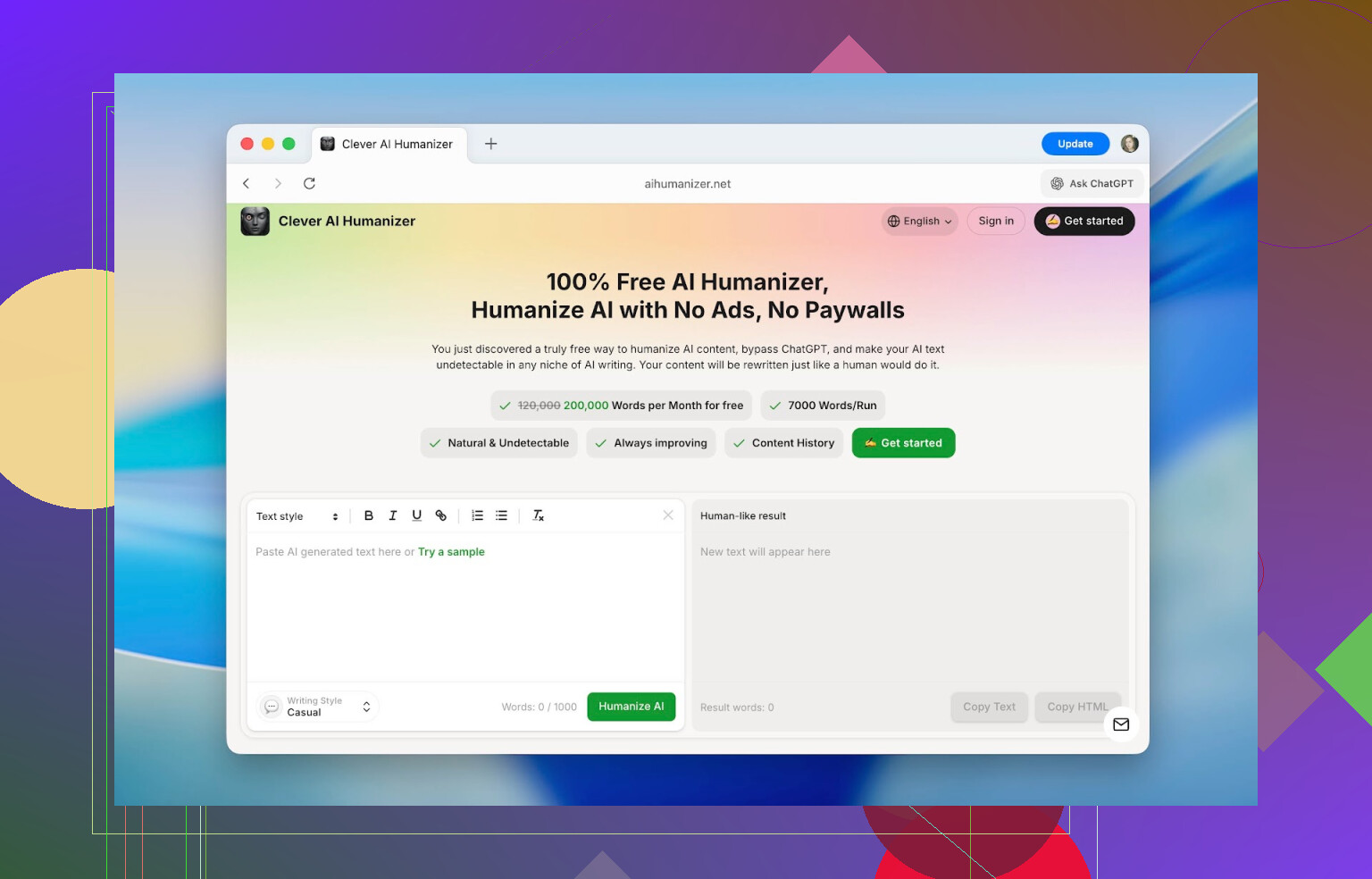
The first surprise for me was the interface. A lot of these “AI humanizer” sites feel like someone spun them up in a weekend: tiny input box, no layout, everything clunky. Clever AI Humanizer actually looks like a finished product:
- big workspace
- clear “input on left / output on right” layout
- word counter and limits right where you can see them
It feels like a tool you could use daily without wanting to slam your head into the keyboard.
Is it really free, or “free*”?
This part I was suspicious about, but it’s actually usable for free:
- Up to 1,000 words per run
- Up to 7,000 words per day total
- 4,000 words without an account
- +3,000 words per day after you sign up (email / Google / Apple)
No “surprise, you hit your limit at 300 words, pay $19” stuff in the middle of a project. If you’re working on essays, blog posts, or assignments, 7k/day is workable. Not infinite, but not fake-free either.
Features that actually matter once you start using it
At first glance I thought, “Okay, cool, it rewrites text, so what?” After poking it from different angles, a few things turned out to be more useful than I expected.
1. Detection scores drop a lot more than I expected
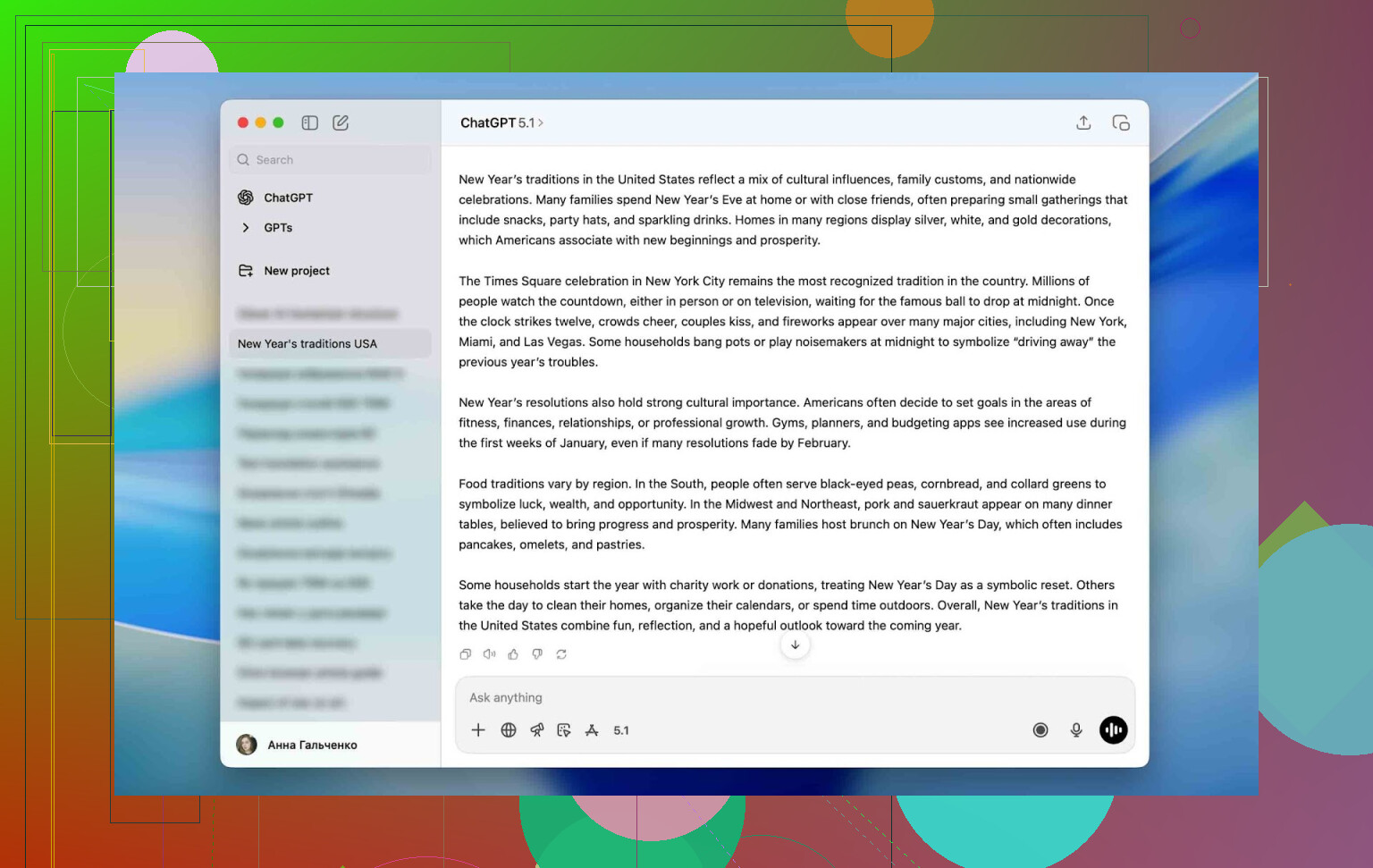
I fed it raw ChatGPT output, the kind you get from a basic prompt with no tweaking. Before humanizing, detectors like ZeroGPT were calling it 100% AI.
After running those same chunks through Clever AI Humanizer, I repeatedly saw scores like:
- 13%
- 6%
- sometimes basically 0%
So it wasn’t just swapping synonyms. The pattern of the writing changed enough that the detectors stopped screaming.
Is it guaranteed 0% everywhere? No. And nothing is. Detection tools constantly tweak their models and they’re looking at patterns, not “forbidden words.” But the drop was big enough to matter.
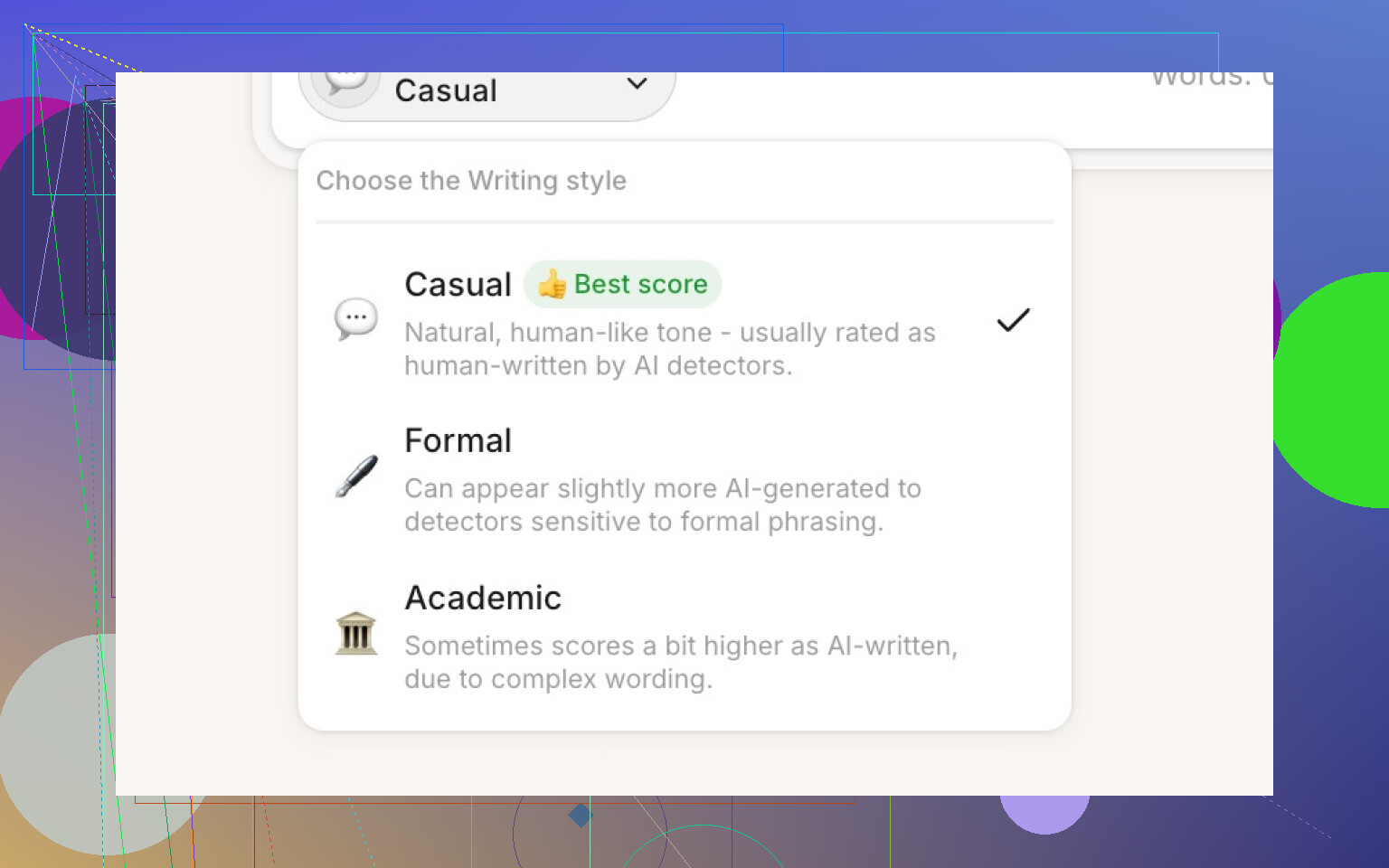
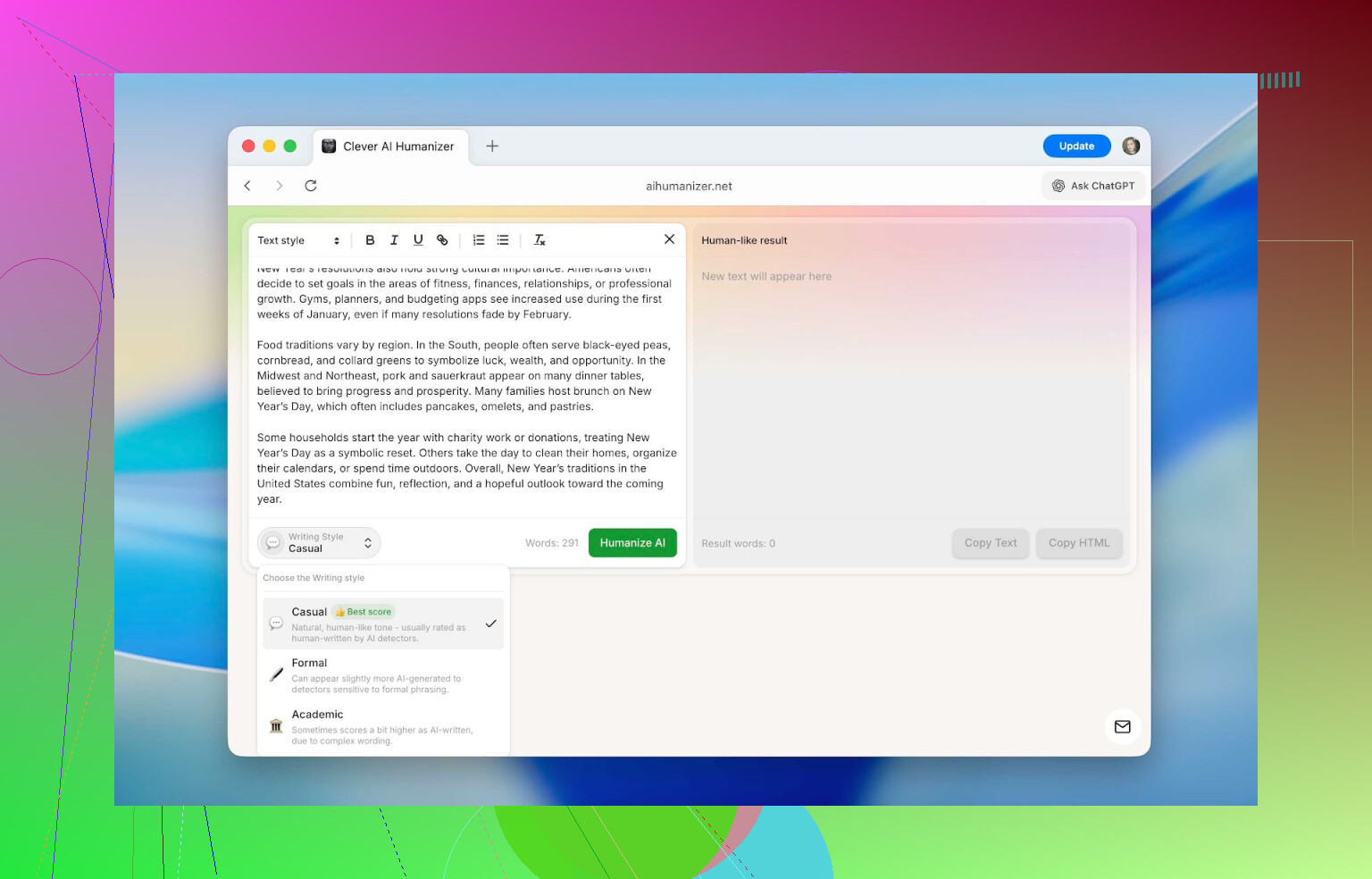
2. Three tone styles you can actually see
You get three modes:
- Casual
- Formal
- Academic
They’re not just labels. The difference is obvious:
- Casual: feels more chatty, personal, “online conversation” style
- Formal: cleaner, restrained, neutral, fewer contractions
- Academic: reads like you’re writing for a paper or report
AI detectors do sometimes give slightly different scores depending on the tone, but for me the variance was usually within 3–5%, which is basically noise. I mostly stuck with Casual during tests, just to keep things consistent and not waste my word budget.
3. Built‑in history that actually remembers stuff
This one I didn’t expect to care about, but ended up using a lot.
Once you sign in, the tool keeps a history of all your rewrites:
- date
- word count
- a little snippet preview
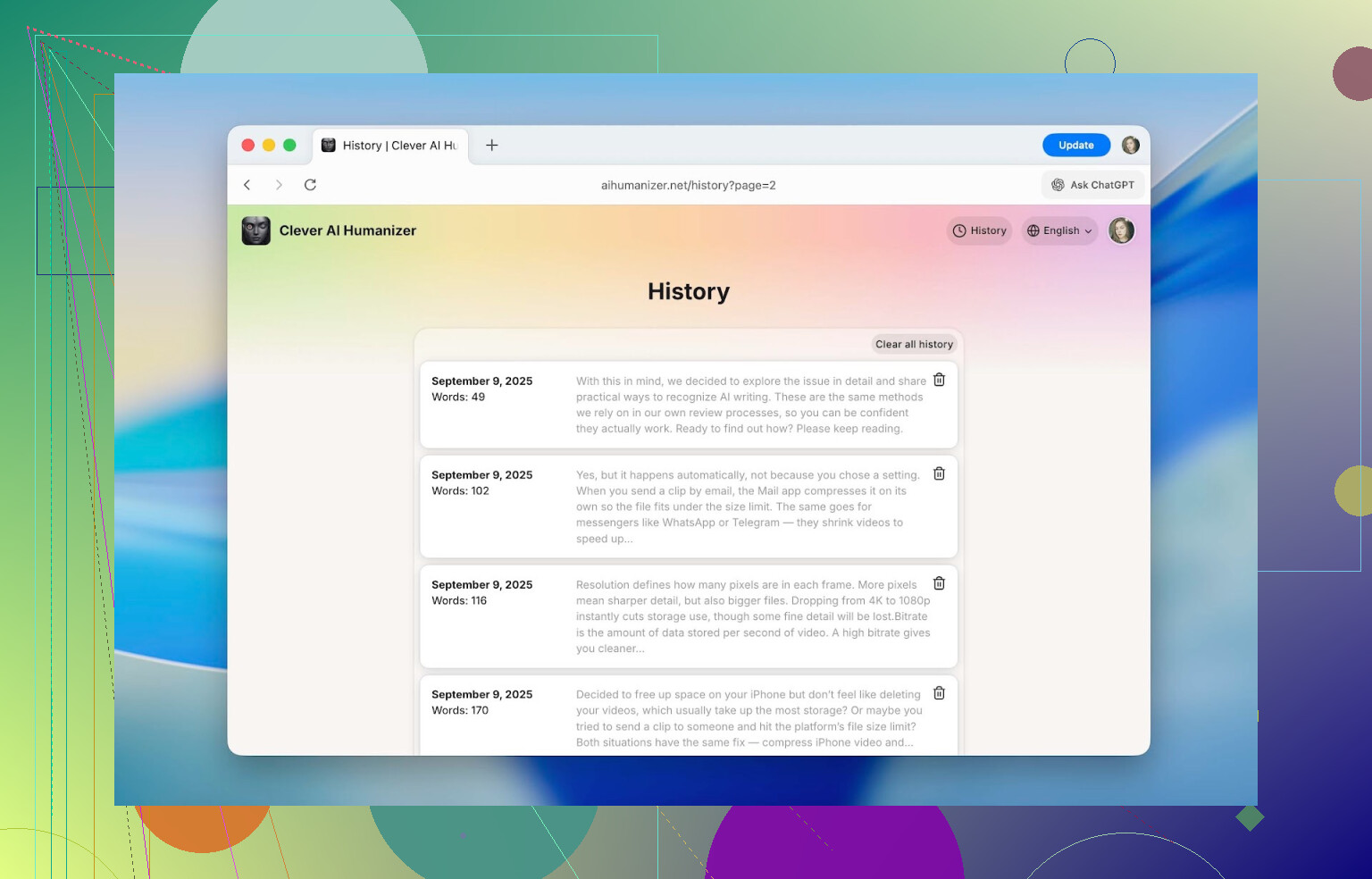
I went back to stuff I had humanized months earlier (September in my case) and it was still there. No silent deletion, no “storage period expired.” If you’re working on a long‑term project or a series of posts, this makes more sense than constantly keeping your own messy copy‑paste archive.
4. Formatting survives the rewrite
Most tools treat your input as plain text. Clever AI Humanizer lets you format stuff inside the editor, and then keeps that formatting in the output:
- headings
- bold / italics / underline
- links
- bullet and numbered lists
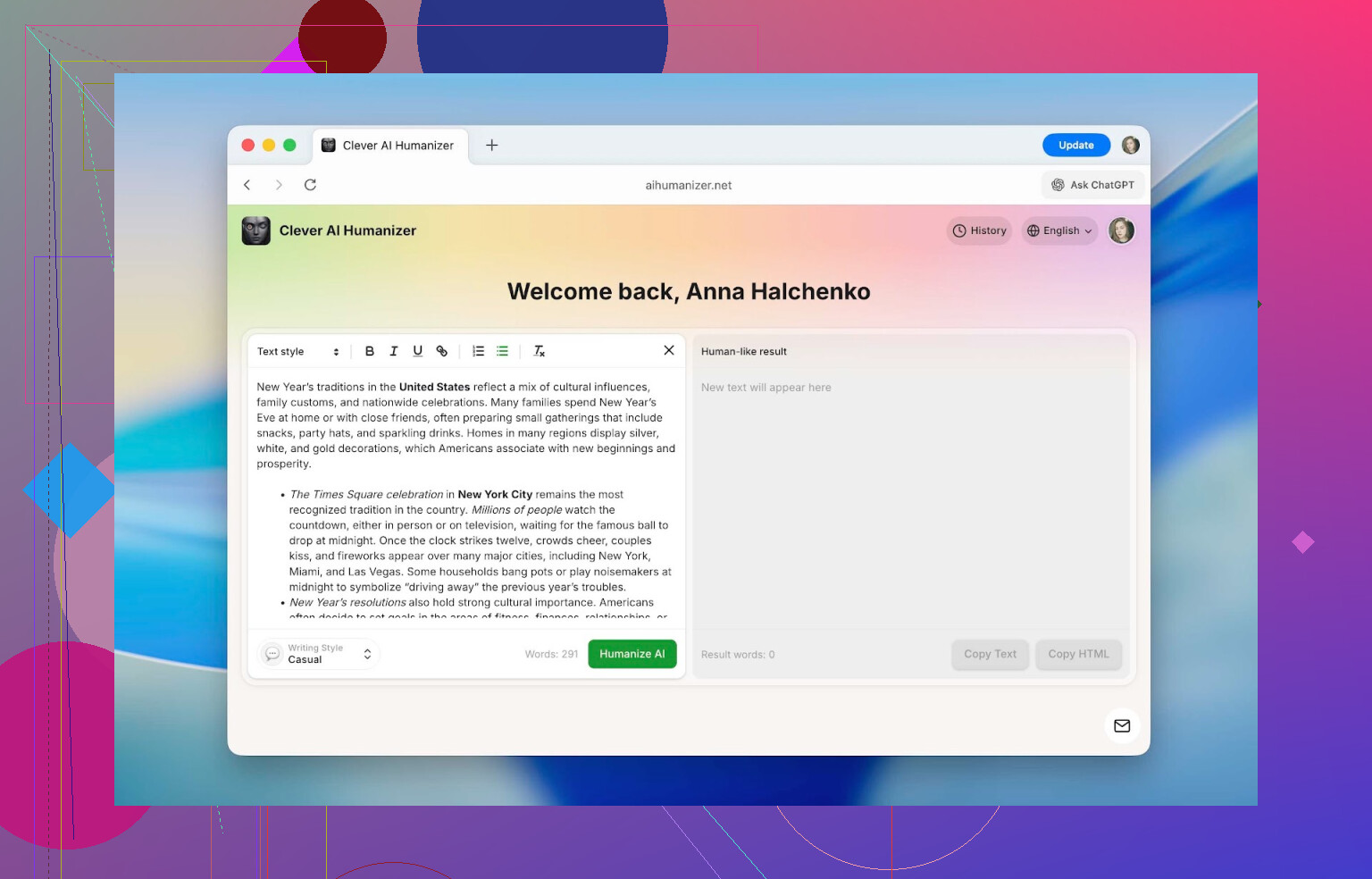
The key part: the formatting survives the humanization and copying. So if you’re working on:
- school assignments with strict formatting
- research notes
- internal docs with specific layout
you don’t have to redo headings and lists after every rewrite.
5. Multilingual support
It’s not English‑only. It handled:
- French
- Spanish
- Italian
- German
- Dutch
- Portuguese
- Polish
- and a few others
Plus the interface itself can be switched to multiple languages, so you don’t need to rely on your browser’s auto‑translate to figure out where things are.
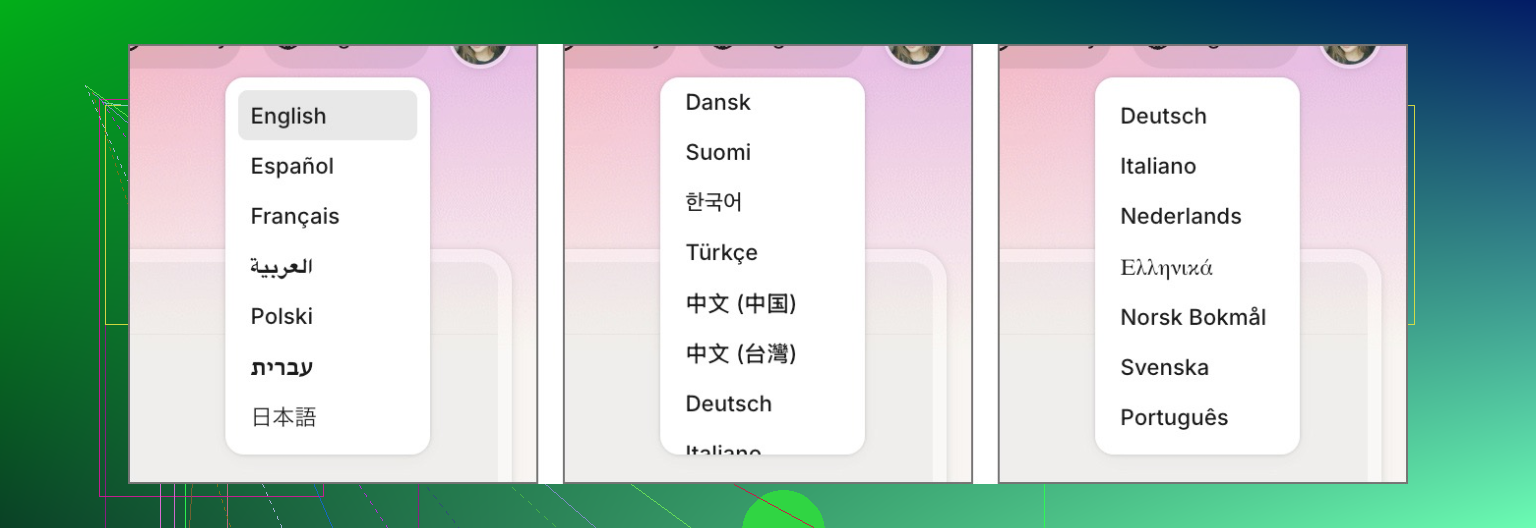
If you’re doing bilingual content, EU‑market stuff, or assignments in different languages, that’s a legit advantage.
How to actually use Clever AI Humanizer (step by step)
This section is about how you use it as a normal person, not how the model works internally. If you want the “under the hood” explanation, they have a page for that:
How it works (dev explanation):
What I can explain is how I used it from the front end.
-
Open the website:
https://aihumanizer.net/ -
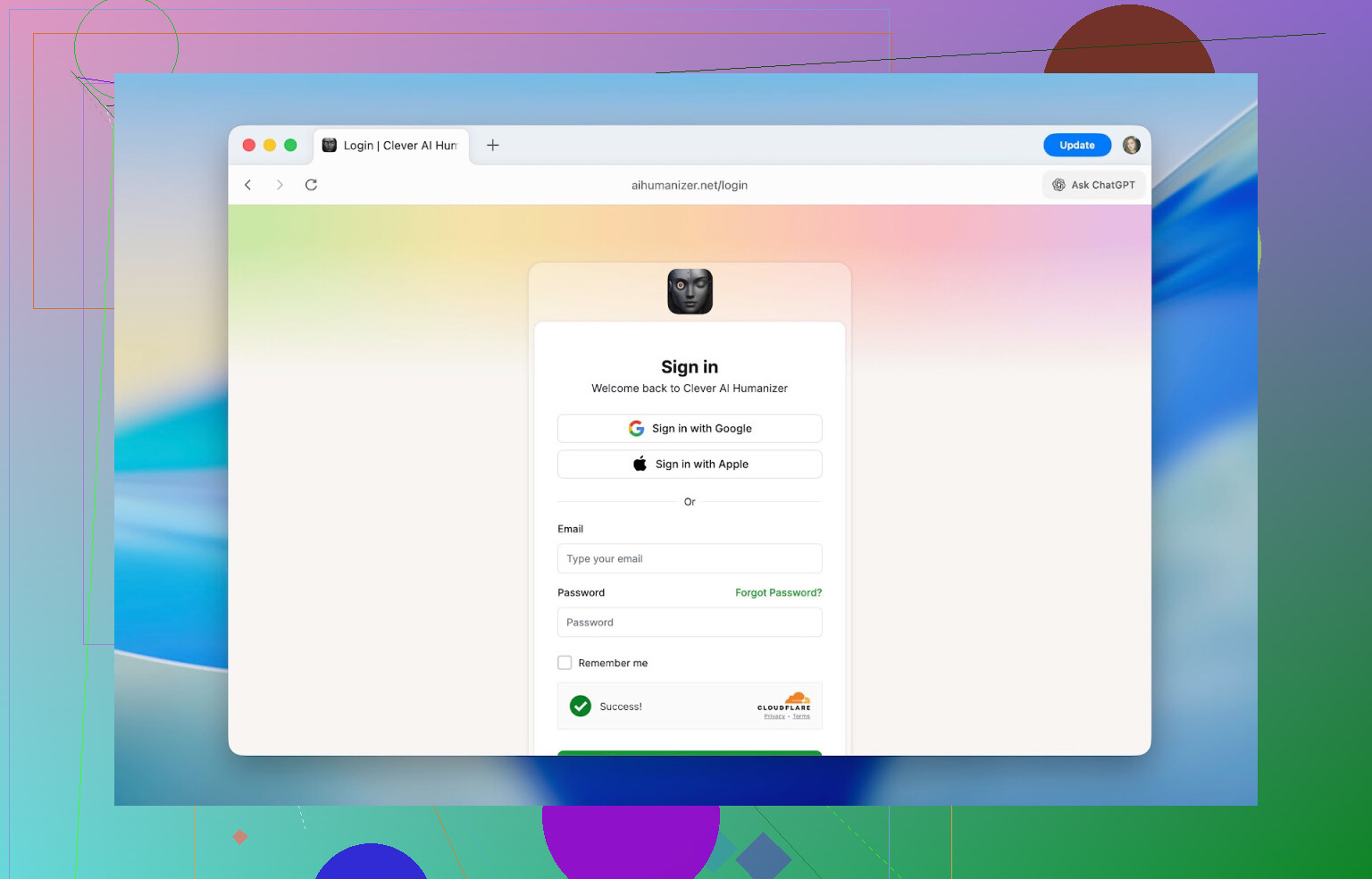
Optional but recommended: click Sign In (top right).
You can use Apple, Google, or an email+password.
This gives you:- more daily words
- access to your rewrite history
-
Paste your original text into the left text box. That’s your “input” side.
-
At the bottom, select Casual, Formal, or Academic, then hit Humanize AI.
-
After a short pause, the rewritten version appears in the right box. Changes are highlighted in blue so you can see what got altered and why it reads more naturally.
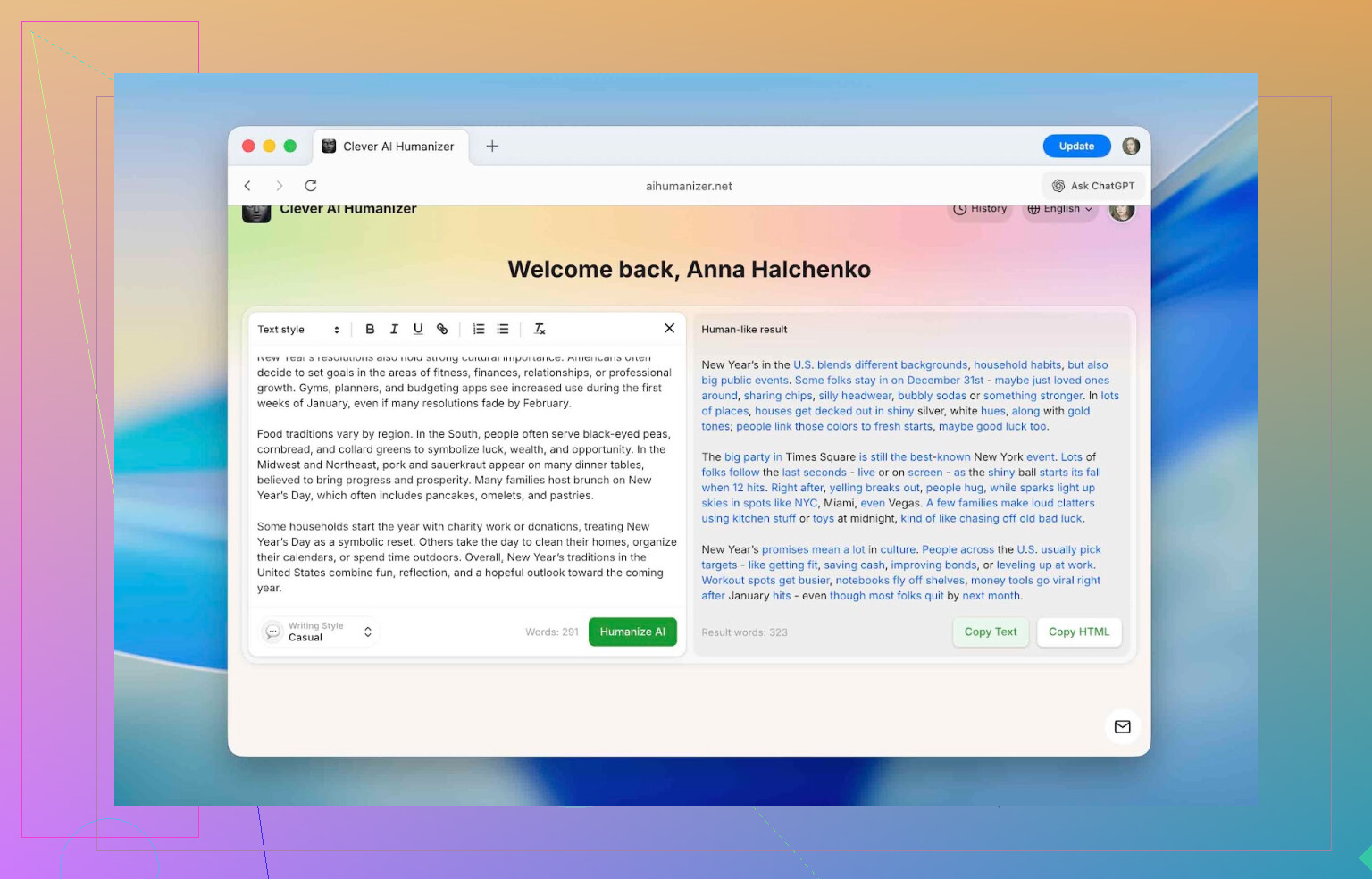
From there, you just copy and paste it into your doc / CMS / AI checker / whatever you’re using.
How well does it actually dodge AI detectors?
This is the part most people care about, so I tried to be systematic.
I used four common checkers:
- QuillBot AI Checker
- ZeroGPT
- GPTZero
- Undetectable AI detector
These are the names that keep coming up in academic and workplace conversations.
My test setup
-
I generated a basic text in ChatGPT. Nothing fancy, just typical “default AI voice” stuff.
-
I ran that raw text through all four detectors. Every single one flagged it as AI with very high confidence.
-
I then took that exact same text, ran it through Clever AI Humanizer in Casual mode, no manual edits.
-
I fed the humanized version back into all four detectors and logged the new scores.
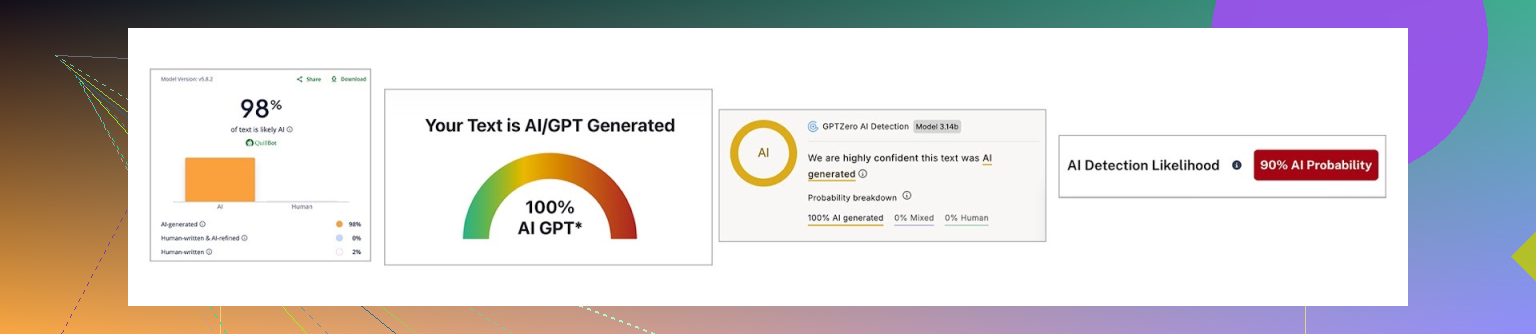
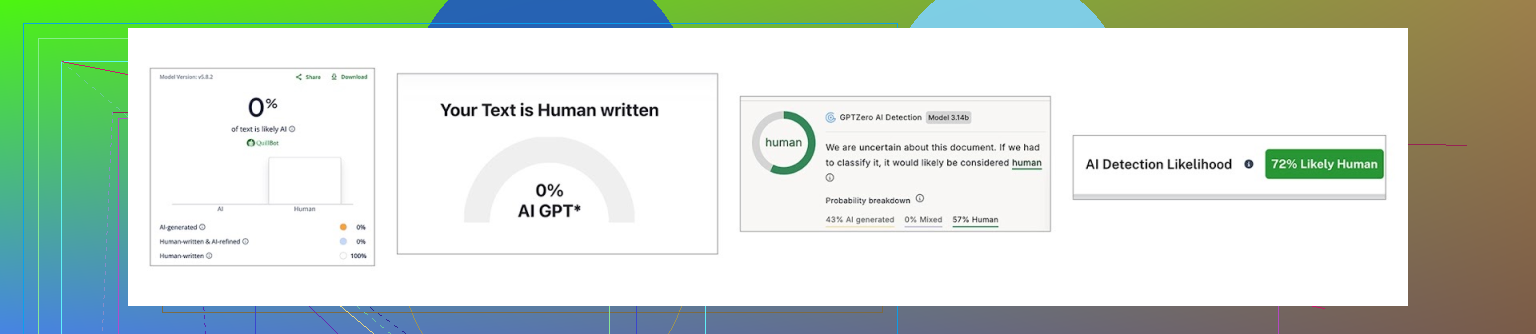
Here’s the before/after:
| QuillBot | ZeroGPT | GPTZero | Undetectable AI | |
|---|---|---|---|---|
| Before, % | 98 | 100 | 100 | 90 |
| After, % | 0 | 0 | 43 | 27 |
So:
- QuillBot & ZeroGPT: dropped all the way to 0% AI
- GPTZero: still flagged 43%
- Undetectable AI: 27%
This confirms two things:
- The text pattern really does change a lot.
- Different detectors are not remotely in sync with each other.
There’s also this earlier comparison they reference:
Clever AI Humanizer Review: Is It Really That Good?[sc%20name=
The gist: every detector uses its own indicators, formulas, and thresholds. None of them are “proof.” At best they tell you, “This looks like AI-ish writing.”
Ethics and reality check
Just to be clear about my own stance: I’m not saying “use this to pass off fully AI‑written essays as your own.” For the test, I used 100% AI text because that’s the cleanest way to measure the change, but that’s not how I’d actually use it for real work.
The realistic way to use something like this (that I’m personally comfortable with):
- You write the core content yourself.
- You optionally let AI help with edits, grammar, or suggestions.
- You run the AI‑touched parts through a humanizer to scrub the obvious “AI voice” patterns.
That way the ideas and structure are still yours, but you sidestep detectors that might flag your work just because you used an AI for polishing.
How Clever AI Humanizer compares to other tools
I didn’t want to just test it in a vacuum, so I pulled in a bunch of other “AI humanizer” tools people usually talk about:
- Humanize AI
- Originality.ai Humanizer
- Undetectable AI Humanizer
- QuillBot AI Humanizer
- AI Humanize
- Decopy AI Humanizer
I found them the same way anyone would: type “AI humanizer” into Google, open the top results, test them.
To keep it fair:
- I used the same ChatGPT text for all tools.
- I ran each humanized version through ZeroGPT (because it’s free and fast).
- For tools without a meaningful free tier, I used their lowest paid plan for reference.
Here’s the summary:
| Metrics | Clever AI Humanizer | Humanize AI | Originality.ai Humanizer | Undetectable AI Humanizer | QuillBot AI Humanizer | AI Humanize | Decopy AI Humanizer |
|---|---|---|---|---|---|---|---|
| Pricing model | Free | Light $19 / Standard $29 / Pro $79 | $14.95/month or pay‑as‑you‑go $30 | from $19/month | $9.95/month | Basic $15 / Pro $25 / Unlimited $40 | Free |
| Monthly word limit | 210000 | 20000 | 200000 | 20000 | Unlimited | 15000 | Unlimited |
| Additional features | Formatting preserved, history, 3 tones | Humanization style | Plagiarism/AI detection, history, 4 tones, length control | – | Rewrite history | 8 tones, history | 8 tones, length control |
| Detection drop (ZeroGPT) | 0% | 100% | 100% | 17.76% | 65.12% | 53.74% | 62.4% |
A couple of things stood out:
- Some tools don’t really let you test properly for free; the limits are a joke.
- For those, the only realistic scenario is paying and testing from their cheapest plan.
When you strip everything else away, for this type of tool there are basically two questions that actually matter:
- How much does it reduce AI detection?
- How much does that result cost you?
On that axis:
- Clever AI Humanizer: biggest drop in detection, completely free, decent word cap.
- Undetectable AI Humanizer: second place for detection, but paid, and the price scales with words. Entry is around $19.
What honestly shocked me was:
- QuillBot AI Humanizer
- Originality.ai Humanizer
Both have strong brands and paid plans, but when I tested them with that same ChatGPT text, ZeroGPT still saw the result as almost 100% AI. Which kind of defeats the whole purpose of using a “humanizer.”
If your main goal is “make this pass AI checks as much as possible without paying,” Clever AI Humanizer is the obvious pick from this group. If you’re okay paying and want a backup, Undetectable AI Humanizer does reasonably well too.
Where Clever AI Humanizer actually makes sense to use
People usually think “students dodging AI detectors,” but that’s definitely not the only use case. Anywhere you’ve got AI‑generated content that sounds like every other ChatGPT reply, this kind of tool helps knock that edge off.
Typical places it fits:
- Cleaning AI‑ish sections in essays, homework, reports, and slide decks.
- Rewriting social posts:
- Instagram captions
- Threads updates
- TikTok or YouTube video descriptions
- Making product descriptions on marketplaces feel less generic and more trustworthy.
- Polishing blog posts or web pages that started as AI drafts.
- Smoothing internal company docs drafted with AI help.
- Adapting guest posts / sponsored content to match a site’s editorial tone.
Basically, any time you pasted something from an AI and thought “This doesn’t sound like me,” running it through Clever AI Humanizer gets you a version that feels more human without spending an hour rewriting everything from scratch.
Final thoughts after testing it
After pushing it through a bunch of tests, here’s where I landed:
- It really does drop AI detection scores a lot, especially on tools like ZeroGPT and QuillBot’s checker.
- It’s actually free in a way that’s usable, with around 7,000 words per day.
- Word history, formatting preservation, and tone modes are genuinely useful, not just bullet‑point fluff.
They call it “the best AI humanizer” in their own material and, based on practical use plus the comparison table, I get why they rank it high in reviews like this:
Clever AI Humanizer Review: Is It Really That Good?[sc%20name=
If your goal is: “I wrote something (or partially wrote something), used AI to clean it up, and I don’t want detectors freaking out about that,” then Clever AI Humanizer is absolutely worth trying.
Just keep the bigger picture in mind: these tools are helpers, not substitutes for having your own ideas. Let AI assist with phrasing and polish, but don’t outsource the thinking part.
If you’ve tried it yourself or have strong opinions about humanized AI content in general, there’s a thread here where people are talking about it:
18 Likes
Short version: “Safe” technically, “safe” ethically… not really.
A few points from someone who’s played with Clever Ai Humanizer and also teaches part‑time:
-
On the tech side / detection risk
- Tools like Clever Ai Humanizer absolutely can drop AI detector scores a ton.
- People like @mikeappsreviewer already showed it: raw GPT text goes from 90–100% AI down to single digits on some detectors.
- That does not mean your college is blind. Schools don’t rely only on detectors:
- They compare to your past writing style.
- They look at citations, logic, and originality.
- Some instructors can just feel when something is off and start asking questions.
Detectors are flaky and inconsistent, but using a tool that’s specifically marketed as “bypass AI detection” is exactly the kind of thing academic integrity boards are now looking for.
-
On the ethics / policy side
- Most colleges’ policies cover more than “don’t use ChatGPT directly.”
- They usually say things like “don’t submit work that isn’t your own” or “don’t use AI to generate or significantly rewrite assignments unless explicitly allowed.”
- Taking an AI essay, running it through Clever Ai Humanizer so it looks human, then handing it in as your own is still misrepresentation, even if the detector says 0% AI.
- If they decide it’s misconduct, “but I used a humanizer so it looked more natural” is not a defense, it’s practically an admission.
-
On actual safety
- Privacy‑wise, any time you paste assignment text into a third‑party site, you’re assuming:
- They won’t log & reuse it.
- Their security won’t get breached.
- If your essay includes identifiable info, research data, or anything sensitive, that’s another risk layer.
- Also, if your school ever asks you to explain your process and you say “I used Clever Ai Humanizer to bypass detectors”… that can go very badly.
- Privacy‑wise, any time you paste assignment text into a third‑party site, you’re assuming:
-
Better ways to use it (that don’t blow up your academic record)
If you really want to use Clever Ai Humanizer and still sleep at night, this is the only scenario I’d even remotely defend:- You write the essay yourself.
- Maybe you use AI for grammar help or to brainstorm structure.
- You optionally run small sections through Clever Ai Humanizer to smooth stiff phrasing so your writing doesn’t accidentally look like AI and get falsely flagged.
- You still control the arguments, wording, and final draft, and you could reproduce the work if asked.
Even then, check your specific course / syllabus. Some instructors are fine with “AI as a writing aid,” some are zero‑tolerance.
-
What I wouldn’t do
- Generate the whole essay with ChatGPT.
- Paste it in Clever Ai Humanizer.
- Submit it unchanged.
That’s basically textbook “contract cheating with a machine in the middle.” If they catch you, the fact that detectors gave you a low score is irrelevant. They don’t have to prove “which tool” you used, only that you did not produce the work yourself.
-
If you’re worried enough to ask…
If you’re already anxious about ethics and getting caught, that’s usually your brain telling you this crosses your own line. Use AI as:- an outline helper
- a “explain this concept” tutor
- a grammar checker
Then write the actual essay in your own voice. Ironically, that’s also what tends to pass detectors best, because it actually is you.
So:
- Is it technically effective? Often yes.
- Is it “safe” for school work in the sense of academic honesty? Not if you’re using it to disguise an AI‑written essay.
- Would I recommend Clever Ai Humanizer at all? Only as a polishing tool for work you genuinely wrote, not as a stealth engine to game your college’s rules.
Short version: “Safe”? Technically sort of. “Safe for your degree”? Not really.
A few points that haven’t been hit as hard yet:
-
Detectors are only half the story
- @mikeappsreviewer already showed Clever Ai Humanizer can drop detection scores a ton.
- @reveurdenuit covered the ethics angle.
What they didn’t spell out as bluntly: even if every detector on Earth says “0% AI,” your prof can still fail you if: - the style suddenly jumps compared to your past work
- you can’t explain your own arguments in office hours
- your citations, structure, or content don’t match your actual level
Academic integrity hearings don’t require a magical AI percentage. They just need “more likely than not you didn’t write this.”
-
Your writing history is your biggest detector
If your previous essays are:- shorter sentences
- more grammar mistakes
- weaker structure
and then out of nowhere you hand in a polished, tightly argued 2k‑word paper that reads like a grad student… you’re going to raise eyebrows, even if Clever Ai Humanizer got you a 0% on ZeroGPT.
In practice, the “style mismatch” is what catches a lot of people, not the detector result.
-
“But everyone is doing it” is a trap
A lot of people quietly use stuff like Clever Ai Humanizer, Quillbot, etc., yes.
You only ever hear about the ones who got away with it, not the ones who had their semester nuked and are too embarrassed to talk about it.One academic misconduct flag on your record is brutal:
- scholarship risk
- grad school apps
- letters of rec
All for… an essay you could probably have written in a weekend.
-
The tool itself is fine, the use is the problem
As a product, Clever Ai Humanizer is actually solid:- preserves formatting
- has history
- tones like Casual / Formal / Academic
- free tier is actually usable
Where I’d personally say it is “safe enough” for school work:
- You wrote the essay yourself first.
- You maybe used AI lightly to check grammar or brainstorm phrases.
- You run a few stiff sentences through Clever Ai Humanizer to make them sound more natural and avoid false flags.
- You could still re‑create the whole argument from scratch if your prof said, “Explain section 3 in person.”
Where it’s not safe:
- ChatGPT writes 90–100% of the content.
- Clever Ai Humanizer rewrites it to dodge detectors.
- You submit that as “your” work.
That’s not “using a tool like a spellchecker,” that’s outsourcing the assignment.
-
Policy-wise, the wording matters
Go reread your syllabus / student handbook. Look for phrases like:- “submitting work generated by AI as your own”
- “unauthorized assistance”
- “substantial rewriting by AI tools”
Most colleges don’t care what specific tool you used. Clever Ai Humanizer, ChatGPT, some other model… they care whether you misrepresented authorship. “The AI wrote it but then another AI rewrote it” is still not your work.
-
If you’re already worried, that’s your answer
You literally asked “safe?” which means you already know this is sketchy. If you do go ahead, you’ll stress the whole time about being caught, and honestly that alone makes it not worth it for a 5–10% bump in polish.
So yeah:
- Using Clever Ai Humanizer as a polisher on text you actually wrote: relatively safe, still check your course rules.
- Using it as a laundering machine for fully AI‑generated essays: academically risky and ethically off, even if detectors say 0%.
If what you really want is to not get destroyed by AI detectors when you only used AI for light help, then Clever Ai Humanizer is one of the better tools in that lane. Just don’t kid yourself that it magically makes AI‑written work “yours.”