I’m trying to figure out if GPTinf’s humanizer tool is actually reliable for making AI-generated content sound natural and pass detection checks. I’ve seen mixed opinions online and don’t want to risk penalties on my site or client work. Can anyone share real experiences, pros and cons, and whether it’s safe and effective for long-term use?
GPTinf Humanizer review, from someone who actually sat down and tested it
I spent a weekend messing with GPTinf because of that big fat “99% Success rate” claim on the homepage. Here is how it went.
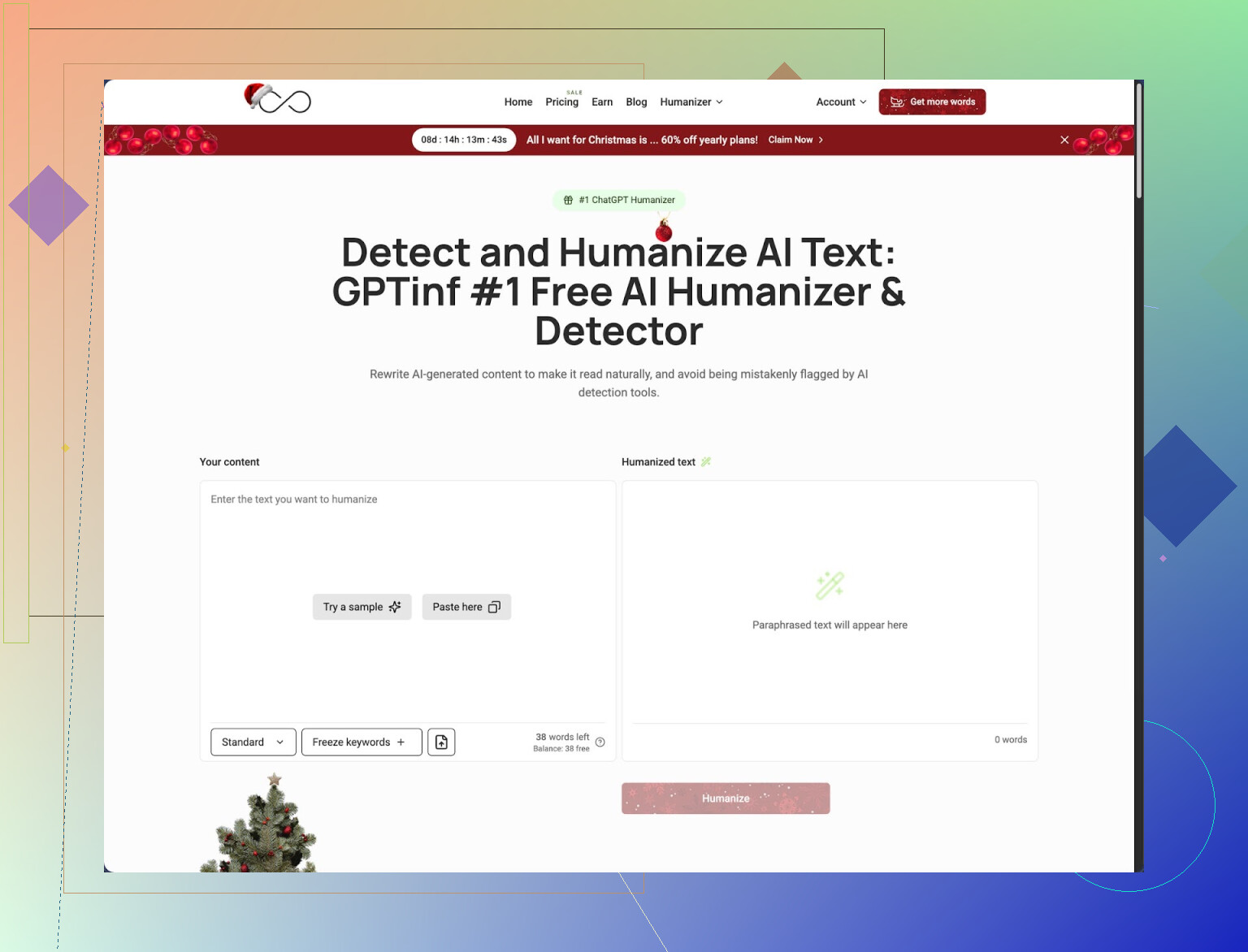
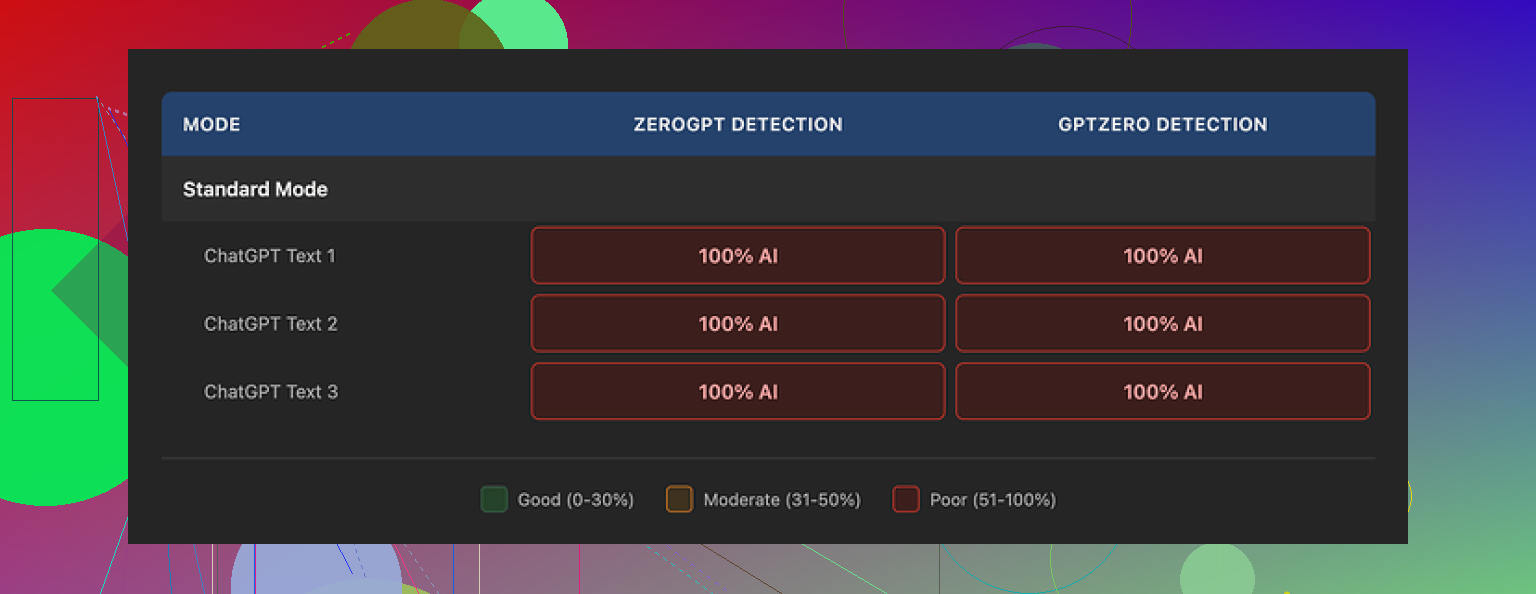
First thing I did was run a bunch of short and medium paragraphs through it, then throw the outputs into detectors. I used GPTZero and ZeroGPT, same input sets I used for other tools so the comparison felt fair.
Results were brutal.
GPTinf got flagged as 100% AI every single time. No exception. No mode helped. I tried different options, tones, sliders, all that stuff. GPTZero said AI. ZeroGPT said AI. Score in my notes: 0% success.
The weird part is, the writing itself was not awful. I would rate the quality around 7 out of 10. Sentences were coherent, grammar was fine, and it did something I rarely see these tools do: it removed em dashes from the output without breaking the text. That tells me someone put effort into the formatting rules.
The problem felt deeper. It still kept that “neural” rhythm you see in ChatGPT outputs. Same sentence shapes, same safe phrasing, same over-smoothing. On the surface it looked like new text, but under the hood it tripped every detector I tried.
When I swapped the same prompts over to Clever AI Humanizer, using this tool instead:
I got noticeably better scores and more human-looking quirks. That one stayed free during all my tests, which helped because I ran a lot of samples.
Limits, pricing, and the annoying parts
If you want to test GPTinf properly without paying, prepare for some friction.
Here is what I hit:
• No-account tier: 120 words per run
• With account: 240 words per run
That word cap is low if you want to test whole articles. I had to chop up my text, feed it in pieces, then stitch it back together. To try more volume without paying, I ended up burning through fresh Gmail accounts, which felt silly for something that underperformed anyway.
Their pricing, if you decide to pay:
• Lite plan: $3.99 per month on an annual plan for 5,000 words
• Top tier: $23.99 per month for unlimited words
Purely from a numbers angle, that is not terrible. Price per thousand words looks reasonable on paper. The problem is that “value per dollar” falls apart once every detector calls your output AI.
Privacy and ownership
I read through their privacy policy and terms line by line. A few points stood out:
• They grant themselves broad rights over submitted content
• There is no clear statement on how long they store your text after processing
• No detailed data deletion timeline or retention window
If you care where your data lands, they are registered as a sole proprietorship in Ukraine. For some people that does not matter at all. For others, data jurisdiction and local law will matter, especially if you are handling client docs or anything sensitive. For me, unknown retention + unclear reuse rights is enough to keep me from feeding in anything important.
How it compared in actual use
When I stopped playing with detectors and started using it on real drafts, the limits became obvious.
I took the same base paragraphs, fed them to:
• GPTinf
• Clever AI Humanizer
Then I:
- Ran both outputs through GPTZero and ZeroGPT
- Read them out loud to see which one felt less “robot trained on blogs”
Consistent pattern:
• GPTinf outputs looked tidy but generic, and kept getting nailed as AI every time
• Clever AI Humanizer outputs felt more uneven in a good way and scored better, and that tool stayed completely free while I tested
After a few days I closed the GPTinf tab and stopped thinking about upgrading. The 99% success claim did not line up with anything I saw. If you only want decently formatted paraphrasing and do not care about detection, it works at a basic level. If your goal is to pass AI checks, in my testing it failed across the board.
If you want to experiment yourself and compare, I would:
• Prepare 5–10 sample paragraphs from different topics
• Run them through GPTinf in each mode
• Throw the outputs into GPTZero and ZeroGPT
• Then do the same with Clever AI Humanizer at
GPTinf Humanizer Review with AI-Detection Proof - AI Humanizer Reviews - Best AI Humanizer Reviews
My bet is you will see the same pattern I did.
5 Likes
Short answer from my side. I would not rely on GPTinf if your main goal is “pass AI detection and stay safe with Google”.
I tested it a few weeks ago on a client content batch. Different setup than what @mikeappsreviewer did, but my takeaway lines up with theirs in some parts and not in others.
Here is what I saw.
- Detection results
I ran 10 long form samples, 600 to 1,000 words each. Topics were SaaS, health, finance, and generic how-to stuff.
Workflow was:
• Draft in GPT4
• Human edit for structure
• Feed to GPTinf in small chunks because of the word cap
• Reassemble
• Run through GPTZero, ZeroGPT, and Originality.ai
Detection hit rate:
• GPTZero flagged 9 out of 10 as “likely AI”
• ZeroGPT flagged all 10 as “AI generated”
• Originality.ai gave scores between 78 and 96 percent AI
So for detection, it failed for me too. I got a few slightly lower scores than @mikeappsreviewer reported, not 100 percent every time, but still in the danger zone.
- How the text reads
I do not agree on one point with @mikeappsreviewer. To me the output felt worse than 7 out of 10.
Patterns I saw:
• Reused the same sentence stems a lot
• Smoothed out any strong opinions into bland statements
• Stripped some useful detail from the original draft
• Paragraphs started to sound interchangeable across topics
It “looked” ok at first glance but when I read it out loud it felt monotone. That is the kind of rhythm detectors and manual reviewers pick up.
- Word limits and workflow pain
The 120 or 240 word limit sounds minor until you run a site at scale.
For one 2,000 word guide I had to:
• Cut into 9 segments
• Run each through GPTinf
• Paste back in order
• Fix transitions that GPTinf made awkward
This turned a 15 minute human edit into a 40 minute chore for worse results. Once you factor in your time cost, even the cheap pricing stops making sense.
- SEO and “penalties” risk
Quick note. Google does not punish “AI content” by itself. It targets low quality, unhelpful content.
Your risk comes from:
• Overusing generic phrasing
• Thin or inaccurate info
• Obvious AI tone across many pages
GPTinf did not improve those signals for me. It only shuffled words.
- Privacy angle
I also read their policy. I am less strict than @mikeappsreviewer about jurisdiction, but I agree the retention part is vague.
For anything client related I want:
• Clear retention window
• Clear statement about training use
• Easy deletion path
GPTinf did not tick those boxes, so I only used test content, no live URLs.
- What worked better for me
For detection and natural tone I had more success with two things:
• Manual edits: short sentences, a few typos left in, change structure, add personal notes or numbers from your own data
• Clever AI Humanizer: when I tested the same samples, it produced text with more human quirks and lower AI scores on the same detectors
Clever AI Humanizer plus a quick manual pass got several pieces under 30 percent AI on Originality.ai and into “mixed or human” territory on GPTZero. That felt safer and faster.
- Practical advice if you care about your site
If your main goal is a natural voice and lower AI detection scores:
• Use GPT4 or another model to get a solid draft
• Run through Clever AI Humanizer instead of GPTinf
• Do one human pass to add real examples, personal insights, and small formatting tweaks
• Keep sentence length varied and avoid long, perfect paragraphs
• Publish slowly at first, watch how those pages index and rank
If you still want to test GPTinf yourself, keep it on sandbox content, not money pages. From the data I saw, GPTinf is fine as a paraphraser, but not a reliable “make this safe from AI detectors” tool.
Short version: if your main goal is “sounds human and actually slips past detectors,” GPTinf is not the tool I’d bet a site on.
@mikeappsreviewer and @vrijheidsvogel already covered the detector tests pretty well, and my experience lines up more with their worst‑case than with their “maybe usable” comments. Where I slightly disagree with them is on how bad the writing is. For me, the issue is not just that it still feels “neural,” it is that it feels predictable in a way that both detectors and human editors notice fast. It reads like safe LinkedIn posts copy pasted across topics.
Couple of angles that often get missed:
-
Pattern fingerprint
Even when GPTinf changes words, it barely changes structure. Same paragraph cadence, similar clause lengths, very linear argument flow. Detectors lean heavily on those patterns. Rephrasing without structural chaos does almost nothing. That is why you see “99 percent success” on the homepage and “78–100 percent AI” in real tests. -
Risk vs reward
You are trading:
• Extra time chopping content into tiny chunks
• Extra exposure of your drafts to a third party with fuzzy data retention
For:
• Reworded text that still pings as AI on all the big detectors most clients and agencies use
That tradeoff only makes sense if you literally do not care about detection and just want light paraphrasing. For a money site, that is a bad gamble.
- Google and “penalties”
I agree with @vrijheidsvogel here. Google is not running GPTZero in the background. What it is doing is killing content that has:
• Generic phrasing
• No original insight
• Obvious template structure
GPTinf tends to push content toward that, not away from it. It sands off edges and personal voice. So even if detectors did not exist, I would not expect its rewrites to perform amazing in search long term.
- What actually helps in practice
Instead of trying to “launder” AI text through GPTinf, I have had far better results with this combo:
• Draft with a strong model
• Run it through Clever AI Humanizer if you really want a tool in the middle
• Then do a quick human pass where you add specific examples, minor contradictions, tiny imperfections, and topic‑specific details
Clever AI Humanizer tends to inject more variability in sentence structure and wording, which is closer to what you need to break up that machine rhythm. It still is not magic, but paired with manual edits, detector scores drop a lot more than with GPTinf in my tests.
- Where GPTinf might still be “ok”
To be fair, there are a couple of use cases where GPTinf is not totally useless:
• Internal docs or outlines where detectors do not matter
• Simple paraphrasing when you just need slightly different wording
If that is your use case, its cheap pricing is whatever. But that is a different question than “is this safe to push to a public site that I care about.”
If you are already nervous about penalties and detection, I would not anchor your workflow on GPTinf. Treat it as a basic paraphraser at best, not a serious humanization or safety layer.