I tried Decopy AI Humanizer to make AI-written content sound more natural, but the results were mixed and I’m not sure if I’m using it the right way. Some parts still felt robotic, and I need help figuring out whether this tool is actually worth it for better readability, SEO, and passing AI detection.
Decopy AI Humanizer
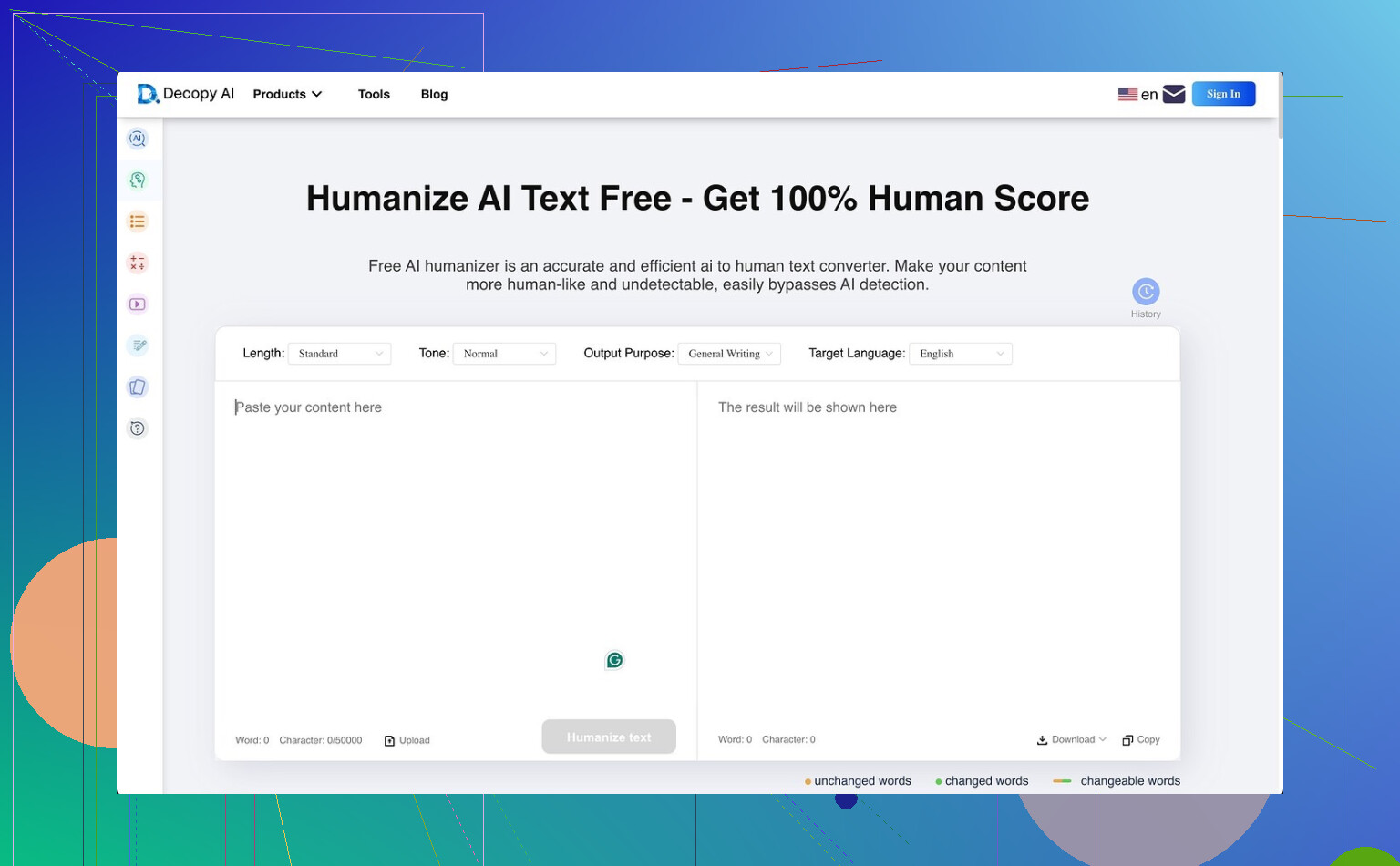
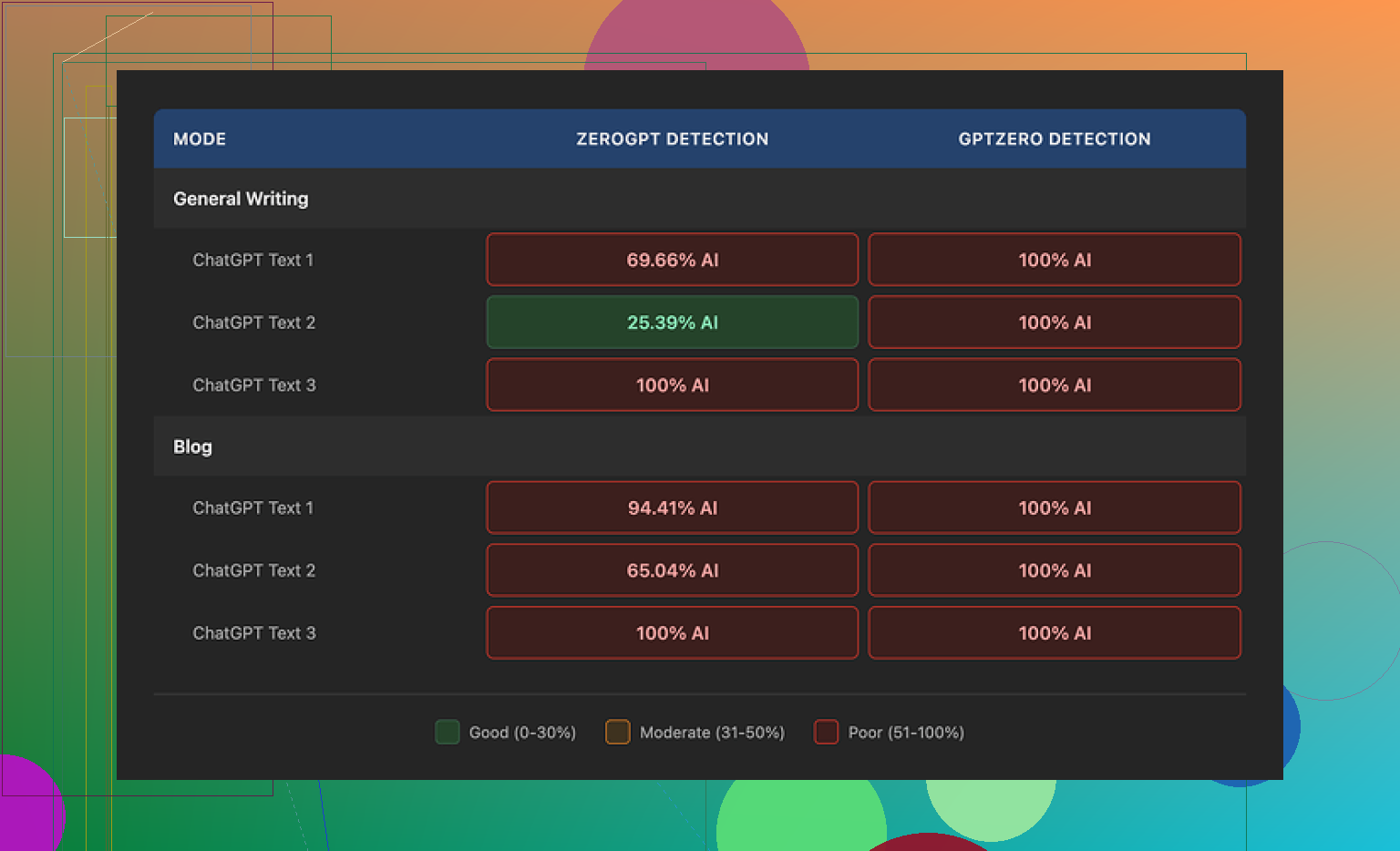
I spent some time with Decopy AI Humanizer, and on paper it looks stacked. You get 500 free runs, up to 50,000 characters in one go, eight tone options, nine purpose presets, and a sentence-by-sentence redo tool for lines you want to fix without rerunning the whole block. For a free tool, that is a lot. The problem showed up fast when I ran the outputs through detectors. GPTZero marked every sample as 100% AI in both General Writing and Blog modes. ZeroGPT jumped around more, roughly 25% to 100% depending on what I fed it, but the pattern still wasn’t good.
One part I did like, it usually kept the grammar intact. I didn’t run into the weird broken phrasing I saw in tools like UnAIMyText or HumanizeAI.io. On output quality alone, I’d put Blog mode around 7/10 and General Writing closer to 7.5/10. Still, the writing gets flattened too much. Blog mode felt like it was trying to explain things to a little kid. General Writing was less awkward, though I still saw phrasing like “digital stuff” and “totally changing tech,” which made the text sound off. Word count stayed close to the source, so at least it didn’t bloat or gut the input.
I also checked the privacy side because free tools tend to get fuzzy there. Decopy’s policy gives a defined three-month retention window and says it follows GDPR and CCPA rules. What I couldn’t find was a clear explanation of what happens to the text you paste in for rewriting. For me, that missing part matters more than the compliance labels.
After testing the same material under the same conditions, Clever AI Humanizer did a better job on the humanization side, and I didn’t have to pay for it.
21 Likes
I don’t think you’re using it wrong. Decopy tends to smooth text, not humanize it in a deep way. That difference matters.
My take is a bit different from @mikeappsreviewer on one point. I think the tool is fine for cleanup. I would not use it as the final step if your goal is natural voice. It trims rough AI patterns, but it also sands off personality. So the result reads clean, yet still fake-ish.
What worked better for me:
-
Feed it smaller chunks. About 120 to 250 words.
Long inputs get bland fast. -
Pick one tone and stick to it.
Switching tone presets too much makes the voice wobble. -
Rewrite the first and last sentence yourself.
Those are where robotic text shows up most often. -
Replace weak filler words after the run.
Stuff like “digital stuff,” “changing tech,” “in today’s world.” Those lines give it away. -
Add one real detail per paragraph.
A number, a short opinion, a tiny example. Even a small detail helps the text feel less template-like. -
Use Decopy for drafts, not for publish-ready copy.
That was the big lesson for me.
Quick test. If you read one paragraph out loud and it sounds like a school handout, it still needs work. If three paragraphs in a row have the same sentence rhythm, same problem.
So no, your mixed results are not weird. The tool is decent for polishing. It’s weak at voice. If you want, paste a short before and after here and ppl can tell you where it still sounds robotic.
I don’t think you’re using Decopy wrong. I think people expect the wrong thing from it.
What @mikeappsreviewer said about detection and what @jeff said about voice flattening both line up with what I saw, but I’d push it a bit further: a lot of these “humanizers” are really paraphrasers wearing a fake mustache. They swap wording, soften structure, and maybe loosen grammar a little, but they do not create actual human intent. That’s why the text can look fine sentence by sentence and still feel dead as a whole.
Where I kinda disagree with @jeff is on one part: I don’t think rewriting just the first and last sentence is enough. Sometimes the middle is where the machine pattern is loudest. You get that samey rhythm, every paragraph making one neat point, every sentence too balanced. Real people drift a little. They interrupt themselves. They overexplain one thing and barely explain the next.
What helped me more than tone settings was changing the source before humanizing it:
- add an opinion Decopy can’t fake
- include one oddly specific phrase
- mix sentence lengths on purpose
- leave one sentence slightly imperfect if it still sounds natural
Also, stop judging it only by detectors. Seriously. Detectors are flaky and weird. The better test is this: would somebody who knows your writing think you actually wrote it? If not, the tool didn’t finish the job.
My take: Decopy is okay for de-stiffening text, not for making it convincng. If the output still feels robotic, that’s probly because the underlying draft still has AI logic baked into it. The tool can repaint it, but it can’t fully rebuild the house.
I’d frame it a little differently: Decopy AI Humanizer is less a “humanizer” and more a “surface editor.” That’s why your result can be cleaner but still not believable.
I slightly disagree with the idea that detector scores are the main signal here. They matter if that’s your use case, sure, but for normal publishing the bigger issue is narrative texture. Decopy often fixes sentence-level stiffness while leaving paragraph-level sameness untouched. That’s the robotic residue people notice.
What I’d test next:
- Run text that already has a point of view, not neutral explainer copy
- Keep some asymmetry in the draft, like one short blunt paragraph next to a longer one
- Manually change transitions, because AI-ish connectors are often the giveaway
- Cut any sentence that sounds “complete” but says nothing
Pros for Decopy AI Humanizer:
- fast
- decent grammar retention
- useful for cleanup
- generous free usage
Cons:
- voice stays generic
- rhythm gets repetitive
- tone presets can feel cosmetic
- not great as a final-pass tool
What @jeff, @voyageurdubois, and @mikeappsreviewer all circle around is basically true: the tool helps, but it does not add real authorship. If you want readable output, Decopy AI Humanizer is fine. If you want writing that sounds lived-in, you still have to do the last 20 percent yourself.