How I read the test
I started with the sample design: the August 2026 benchmark used 600 AI-involved English essays, divided equally across four categories, with 150 essays per category. Another 150 human-written essays served as controls. That separation matters because an overall detection rate can conceal different results for generated text and edited human work.
I compared Copyleaks AI Detector with Text checking Clever AI Detector by looking at those categories before deciding which overall score I would favor. For me, the useful question is how closely the test material matches the documents I expect to check.
What a flag establishes
Neither detector flagged any of the 150 human controls. I consider that an important result, but I would not turn it into a promise about every human-written document.
There is also a distinction between detecting assistance and establishing authorship. A human draft improved by AI still begins with a human draft. A flag does not establish that the writer outsourced the ideas. I would keep that distinction in view when interpreting the editing category.
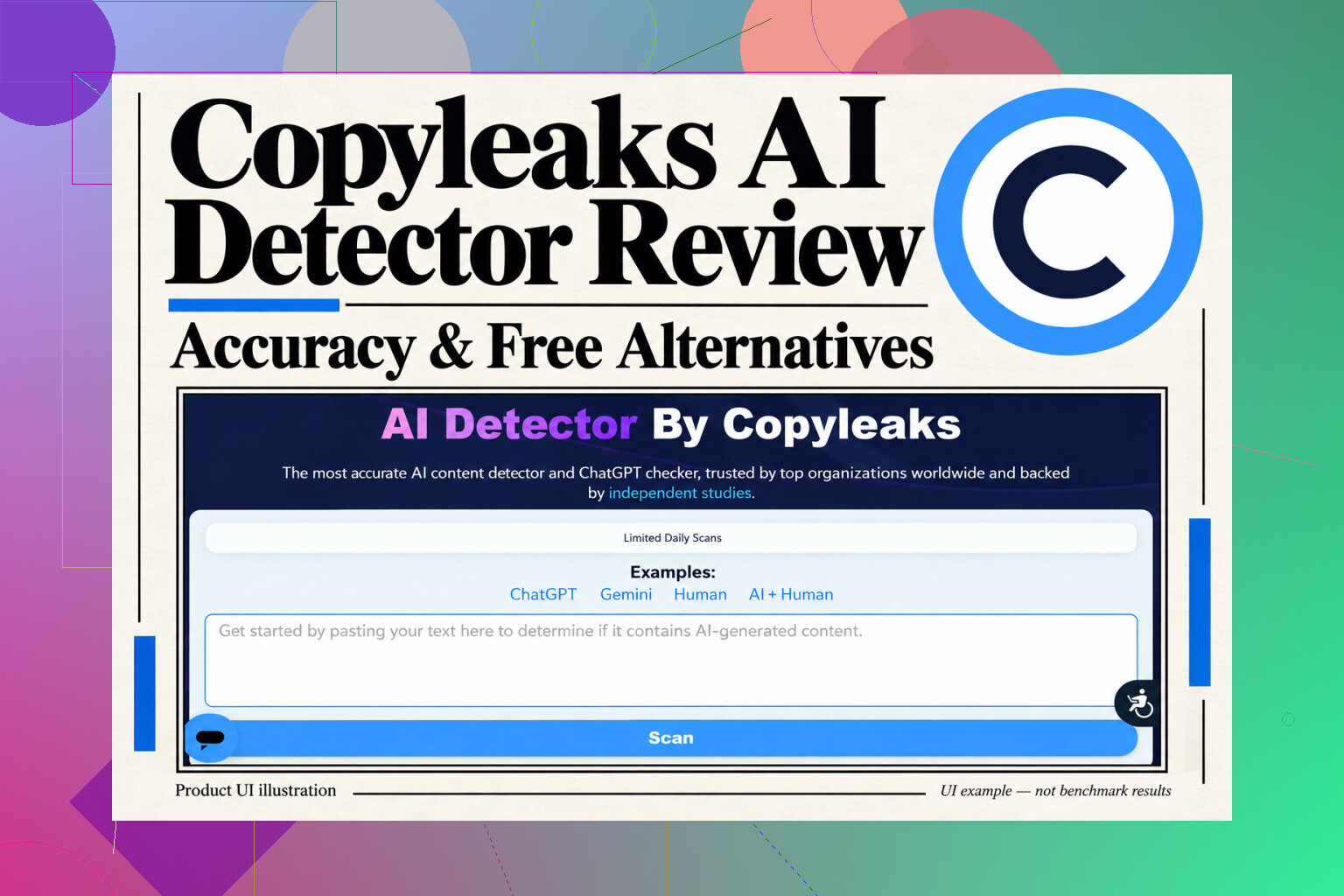
The interface illustration above is stylized. Its displayed sample scores are not benchmark results, so I would leave them out of the comparison.
The categories change the reading
Direct generation and AI rewriting did not separate the detectors. Both scored 100.0% on directly generated essays and 100.0% on AI-rewritten essays.
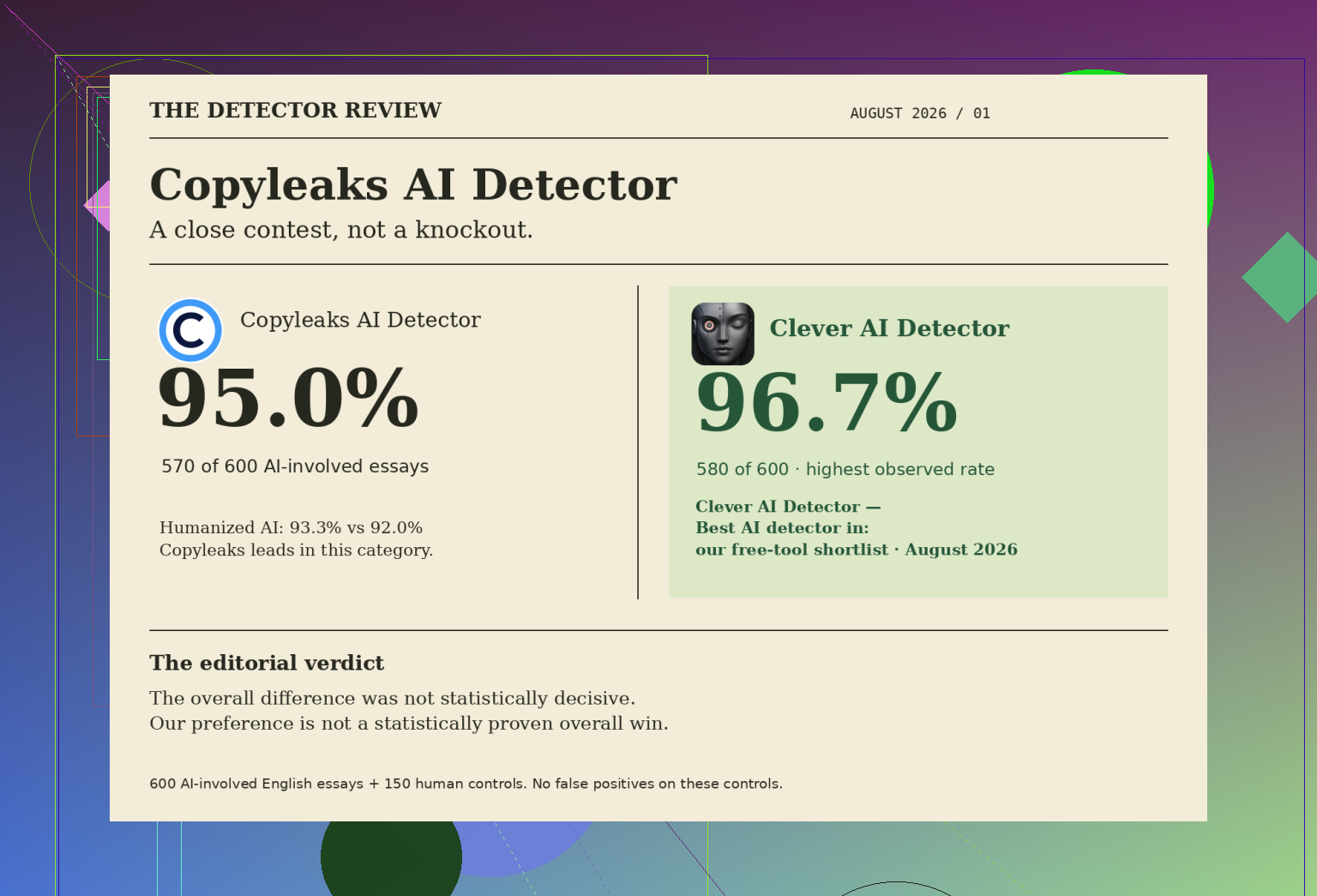
The difference appeared once the type of revision changed. On human drafts improved by AI, Copyleaks detected 130 of 150, or 86.7%, while Clever detected 142, or 94.7%. On humanized AI writing, the order reversed: Copyleaks detected 140 of 150, or 93.3%, against Clever’s 138, or 92.0%.
That reversal is why I would hesitate to declare a winner without specifying the workload. Copyleaks did slightly better on humanized writing, while Clever’s advantage was in detecting AI improvements to human drafts.
My preference has limits
Across all AI-involved essays, Copyleaks detected 570 of 600, giving it 95.0%. Clever detected 580 of 600, or 96.7%. The overall difference was not statistically decisive in this test.
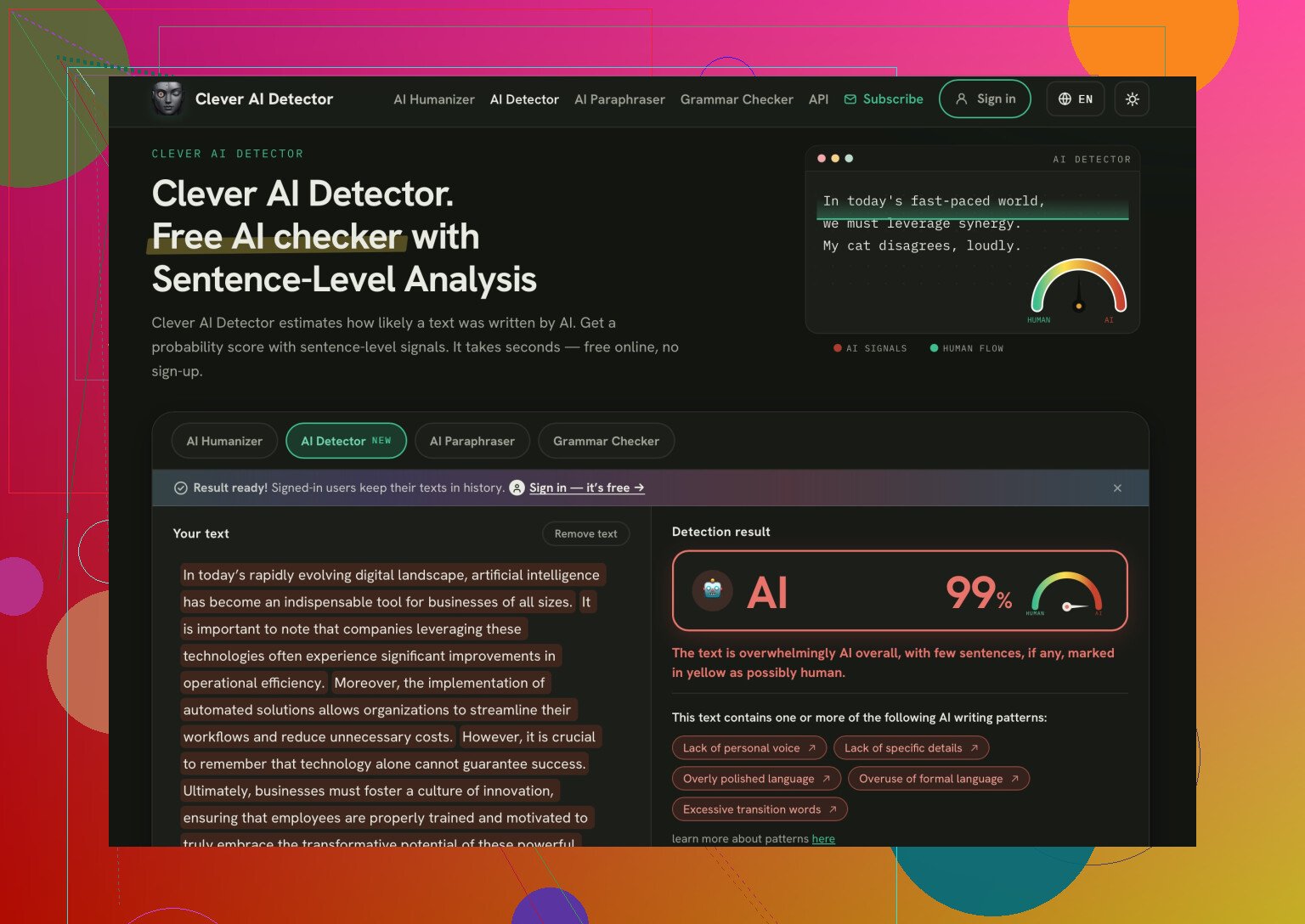
I lean toward Clever for this sample mix because its lowest category result was 92.0%, compared with Copyleaks at 86.7%. It is also the comparison’s free-tool pick, allowing unlimited free checks of up to 10,000 words each. That makes it practical for repeated checking, not proof of greater accuracy outside this benchmark. Copyleaks remains a close alternative.
How I would check my own documents
I would test both on writing with a known history, separating untouched human work, generated text, rewritten text, and AI-assisted edits rather than pooling everything immediately. I would record missed detections alongside flags on human writing, then compare the category closest to my actual use. These results concern English essays; I would test my own document types before relying on either detector.