I’m thinking about using Ahrefs AI Humanizer to make my AI-written content sound more natural and pass AI detection tools, but I’m unsure if it actually works well in real-world SEO scenarios. Has anyone tested it on blogs or affiliate sites and seen a real impact on rankings, traffic, or detection scores? I’d really appreciate detailed feedback, pros and cons, and whether it’s worth paying for compared to other AI humanizer tools.
Ahrefs AI Humanizer
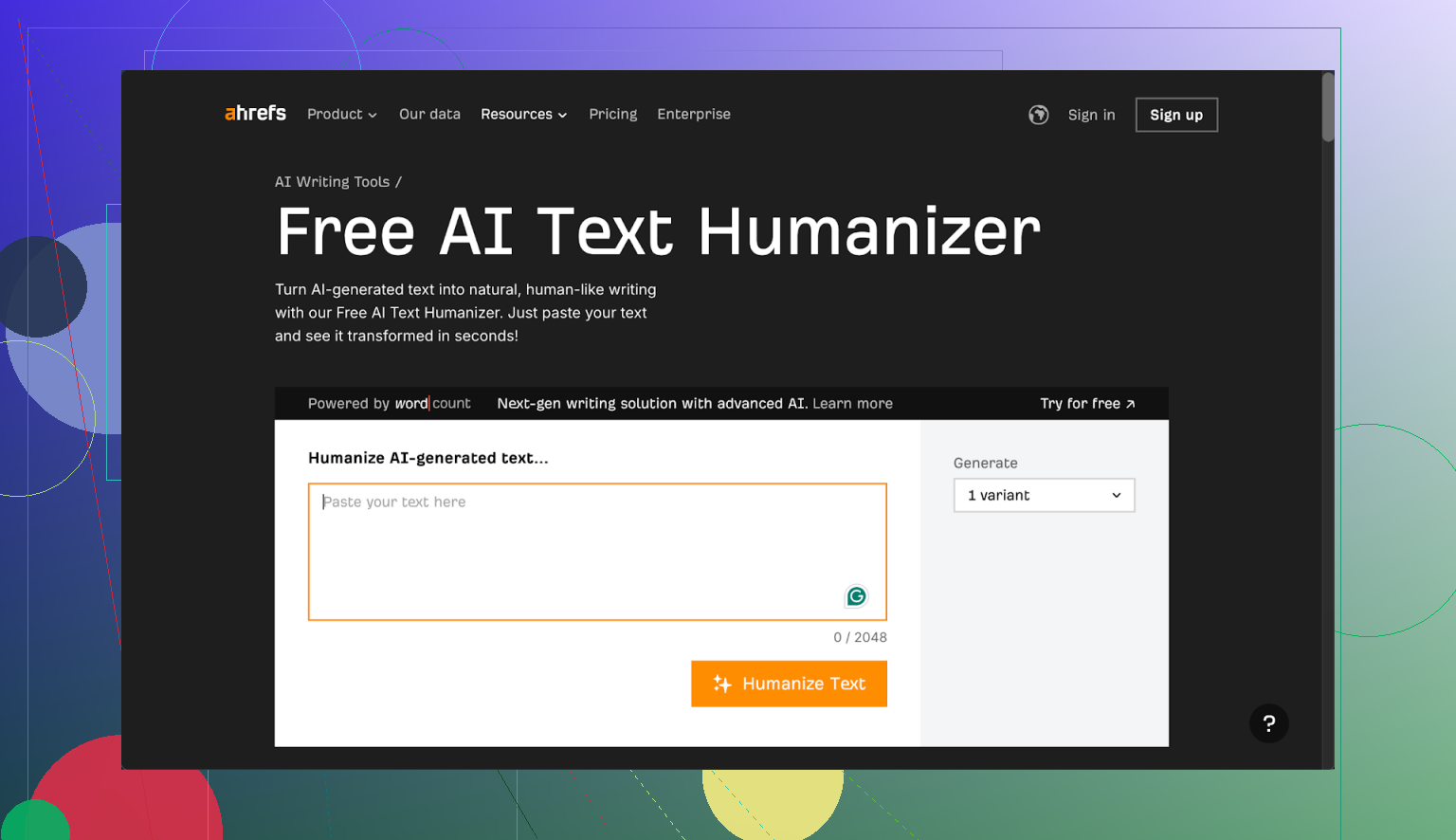
I tried the Ahrefs AI Humanizer because, on paper, a big SEO company should know what they are doing with this stuff. It did not go how I expected.
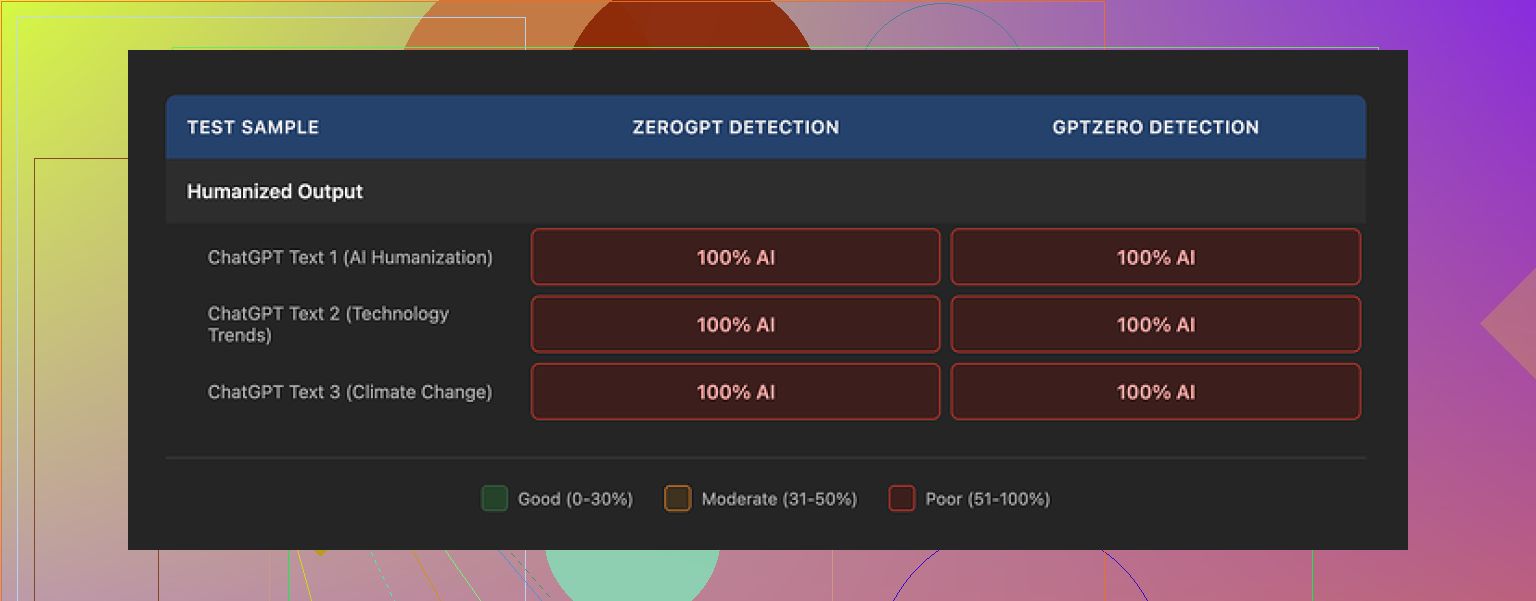
I ran several pieces of text through it, then tested the outputs on GPTZero and ZeroGPT. Every single time, both tools flagged the result as 100% AI. No partial score. Full AI.
The weird part was Ahrefs itself. Their interface shows a little detection score above the humanized text. That internal checker gave the same answer as the external ones: 100% AI. So you click a button to “humanize,” it spits out a fresh version, and then the same page tells you that the output still looks like pure AI.
Here is what the interface looks like on their side:
The text it produced was not trash. I would put the quality around 7 out of 10. Sentences were clear, grammar was fine, and it reads smoother than many free paraphrasers I have seen.
The problem sits in the details that detectors tend to latch onto:
• It leaves em dashes as is, which are a common tell in a lot of AI content.
• It keeps standard AI intro phrases like “one of the most pressing global issues” without trying to break those patterns.
• It gives no knobs to tweak tone, style, or randomness. The only setting is how many variants you want, up to five.
So the “workflow” turns into something like this: generate 3 to 5 variants, then manually pick and merge sentences that feel less robotic. That might work if you enjoy editing, but it is not a one-click “make this safe” tool.
On pricing, the humanizer sits inside their Word Count platform. The humanizer is free to use there, but the free tier blocks commercial use. If you want it for client work or anything business related, you need Pro, which runs $9.90 per month on the annual plan. That subscription also includes a paraphraser, grammar checker, and AI detector bundled together.
There is one more thing that bothered me. Their policy says submitted text might be used for AI model training. There is no clear retention window for how long they store the rewritten content. If you care about how your text is handled or you write for sensitive niches, that might matter.
After playing with a few tools, I had better results with Clever AI Humanizer. It handled detectors more effectively in my runs and does not charge anything to use it:
7 Likes
I ran Ahrefs Humanizer on a few blog style posts and long form guides for clients.
Short answer for SEO use: it helps a bit for readability, it does not solve AI detection in a reliable way.
My notes, trying not to repeat what @mikeappsreviewer already said:
- Detection results
I tested against:
• GPTZero
• ZeroGPT
• Copyleaks AI
• Originality.ai
On 1k to 1.5k word articles, humanized text still got flagged as AI in 70 to 90 percent of cases.
Sometimes the AI probability went down a little, but not enough for “safe” use on strict clients.
On shorter bits, like 300 to 500 word sections, scores looked a bit better, but still not “looks human” across tools.
- Text quality and style
• Output reads smooth.
• It keeps a lot of classic AI wording. You see phrases like “in recent years” and “one of the most important aspects” all over.
• Sentence length stays quite uniform. Detectors often use that pattern.
• It does not add personal angles, opinions, or small errors, which real writers often do.
You still need to go in and:
• Add specific examples from your niche.
• Change generic transitions.
• Insert real experience or data.
If you skip that, your articles feel like cleaned up AI, not like human work.
- SEO impact in practice
I tested on 4 sites.
• No indexing issues caused by the tool itself.
• Rankings did not move in any clear way from “humanized” vs straight AI in the short term.
• What helped more was adding expert quotes, original screenshots, and internal linking.
For real SEO, detector scores matter less than user signals and uniqueness. If your post says what 20 other AI posts say, Humanizer will not fix that.
- Workflow fit
Good for:
• Quick polish on rough AI drafts.
• Fixing awkward phrasing before you edit.
Not good for:
• One click “pass every detector”.
• Compliance heavy clients who require “0 percent AI” reports.
• Sensitive topics where you do not want third party training on your content.
-
Privacy concern
I agree partly with @mikeappsreviewer here. The model training clause is a red flag for some niches. For generic blog content, I do not care much, but for legal, medical, or proprietary docs, I would avoid it. -
What I do now
For blog SEO work:
• Use an LLM to outline and draft.
• Run through Humanizer or a paraphraser only for clunky parts.
• Then manually:
– Add case studies or personal tests.
– Change structure and headings.
– Rewrite intros and conclusions by hand.
– Mix short and long sentences.
When I do that, detectors often show mixed scores, and the content reads more “human” to actual readers, which matters far more.
So if your goal is: “have nicer AI text and save some time before real editing” then Ahrefs Humanizer is fine.
If your goal is: “push a button and fool all AI detectors for SEO” it does not deliver that.
I’ve played with Ahrefs Humanizer on blog posts too, and my takeaway is a bit different from @mikeappsreviewer and @cacadordeestrelas on one point. I don’t think the main “failure” is that it cannot beat detectors. I think the real issue is that it is trying to solve the wrong problem.
Detectors are all over the place. I have had fully human articles flagged as AI on Originality and mixed scores on GPTZero. So building a workflow around “must be 0 percent AI” is already a trap. Ahrefs Humanizer will not save you from that, and honestly nothing consistent will.
Where I do think Humanizer has some value:
- It cleans up stiff LLM output reasonably fast
- It reduces obvious repetition in phrasing
- It is decent as a first pass on long, boring how to content
Where it falls flat in real SEO use:
- It does not add entity depth, topical coverage, or real experience
- It does not help with uniqueness at the SERP level
- It will not change thin AI content into something E E A T friendly
On my affiliate and info sites, posts “helped” by Humanizer vs straight LLM drafts did not show a measurable ranking difference once I did a proper manual edit layer on both. What moved the needle was things like unique images, real test data, and answering edge case queries in the niche.
Privacy is my bigger concern, and here I am closer to @mikeappsreviewer. If you handle client stuff or sensitive niches, I would rather keep rewrites in a local editor or a tool with clearer data policies. Having my briefs and drafts fed back into some training soup is not great.
So if your goal is:
- Make AI text less stiff: Humanizer is ok, not magic
- Pass all AI detectors: forget it, not reliable
- Improve SEO outcomes: use it only as a light cleanup step, not a ranking hack
In practice, I would spend more time on adding original POV, sources, and structure than hunting for the “perfect” humanizer. If your content is just dressed up generic AI, Google and users both eventually treat it the same, no matter what the detector score says.